Journal of caring sciences. 14(4):267-277.
doi: 10.34172/jcs.025.33428
Review Article
Interprofessional Collaboration in Primary Care: Concept Analysis
M. Agung Akbar Conceptualization, Formal analysis, Funding acquisition, Investigation, Methodology, Project administration, Resources, Project administration, Writing – original draft, 1, * 
Junaiti Sahar Data curation, Formal analysis, Investigation, Methodology, Resources, Project administration, Supervision, Writing – review & editing, 2
Yeni Rustina Conceptualization, Formal analysis, Investigation, Methodology, Writing – original draft, 3
Etty Rekawati Methodology, Validation, Visualization, 2
dan Ratu Ayu Dewi Sartika Project administration, Validation, Visualization, Writing – review & editing, 4
Author information:
1Faculty of Nursing, Universitas Indonesia, Depok, Indonesia
2Department of Community Health Nursing, Faculty of Nursing, Universitas Indonesia, Depok, Indonesia
3Department of Pediatric Nursing, Faculty of Nursing, Universitas Indonesia, Depok, Indonesia
4Departement of Public Health Nutrition, Faculty of Public Health, Universitas Indonesia, Depok, Indonesia
Abstract
Introduction:
The concept of collaboration in primary care is described using various terms, reflecting differences in context and professional roles. Although interprofessional collaboration is not a new concept in health care, various terms reflect the complexity and diversity of the different roles and contributions of each health profession. Hence, this study aimed to analyze the concept of interprofessional collaboration in primary care.
Methods:
The concept was analyzed using Walker and Avant’s eight-step method. A literature search was also done using the following databases: Clinical Key, Scopus, ScienceDirect and PubMed from January 2010 to February 2024. The search terms used were "interprofessional collaboration" AND "primary care" OR "primary health care". In the initial search, 315 articles were found but finally 17 articles were deemed relevant and included in the analysis.
Results:
Key defining attributes of interprofessional collaboration include effective communication, teamwork, patient-centered care, shared leadership, and mutual respect. Antecedents include organizational support, education/ training, and commitment. Consequences of interprofessional collaboration include improved quality of care, improved patient satisfaction, efficiency in the disease management, and professional development.
Conclusion:
Five attributes of interprofessional collaboration, its antecedents, and consequences may aid researchers in better understanding the concept and its application in nursing practice. Caring-centered relationships, which lie at the core of nursing practice, are essential to supporting interprofessional collaboration.
Keywords: Concept analysis, Interprofessional collaboration, Primary care, Team-based care
Copyright and License Information
© 2025 The Author(s).
This work is published by Journal of Caring Sciences as an open access article distributed under the terms of the Creative Commons Attribution Non-Commercial License (
http://creativecommons.org/licenses/by-nc/4.0/). Non-commercial uses of the work are permitted, provided the original work is properly cited.
Funding Statement
This study was financially supported by Indonesian Endowment Fund for Education/ Lembaga Pengelola Dana Pendidikan (LPDP), Ministry of Finance, Republic of Indonesia.
Introduction
Interprofessional collaboration is an approach in which different health professions work together to address the complexities of managing health problems.1 However, its implementation is often hindered by unclear roles, poor team understanding, and limited organizational support.2 Therefore, gaining a comprehensive understanding of how to effectively implement interprofessional collaboration is crucial for improving community health outcomes 3
Effective implementation of interprofessional collaboration in primary care can create a holistic and integrated approach to manage health problems.4 Primary care providers are often confronted with a variety of interrelated health problems.5 Interprofessional collaboration forms the foundation for developing coordinated and patient-centred care plans. Clients require diverse and comprehensive services from various health professionals, although the boundaries between professional roles often remain blurred in practice.6 Therefore, health care professionals can maximize teamwork by leveraging each other’s knowledge and skills to meet increasingly complex challenges through interprofessional collaboration.7
The concept of interprofessional collaboration is defined as two or more professions working together to achieve a common goal, and is often used as a means to solve a variety of complex problems and issues.8 Several studies show that interprofessional collaboration is recognized as an important component of high-quality health care.9 Interprofessional collaboration integrates the work of different health care professions, combining complementary competencies and skills to make the best use of resources.2
Inadequate interprofessional collaboration can lead to a lack of comprehensive services. Each profession tends to focus on its own domain, which may limit the comprehensiveness of care delivery.10,11In addition, care coordination can be disrupted, resulting in poorly integrated information between healthcare teams, which can hinder appropriate and comprehensive patient care decisions.12 This can impact on interprofessional synergy, reducing the effectiveness and efficiency of disease prevention, health education, and health promotion efforts.13 Hence, the need for interprofessional collaboration to improve services and overall health system effectiveness.8
The concept of interprofessional collaboration has many different terms. These terminologies reflect the conceptual diversity and the distinct contributions of each profession involved in collaborative care. In addition to interprofessional collaboration, other terms include collaborative practice,14 multidisciplinary team,15 interdisciplinary,16 team-based care,17 integrated care,18 and transdisciplinary.19 This difference is due to the different approaches and paradigms of collaboration. Therefore, reviewing the concept of interprofessional collaboration through concept analysis is essential to conceptualize descriptions, clarify, and simultaneously provide a common understanding.
Despite the extensive literature on interprofessional collaboration, there is a notable gap in understanding its implementation specifically within primary care settings. While existing studies have highlighted the importance and challenges of interprofessional collaboration, few have systematically analyzed the concept through a comprehensive framework. Therefore, this study aimed to analyze the concept of interprofessional collaboration in primary care.
Materials and Methods
A concept analysis approach was used to examine the concept of interprofessional collaboration in primary care. A comprehensive literature review was conducted through searches in four electronic databases: Clinical Key, Scopus, ScienceDirect and PubMed. The search terms used were (“interprofessional collaboration” AND “primary care”) OR “primary health care” for the period between January 1, 2010, to February 29, 2024. Selected articles had to meet the following criteria: open access, written in English, full-text publications, and containing materials on the definition, uses, attributes, antecedents, or consequences of interprofessional collaboration. Editorials, commentaries, book reviews, and anonymous documents were excluded from the analysis.
No strict definition of interprofessional collaboration was applied, to allow for a more comprehensive exploration of the concept. This conceptual analysis aims to contribute to the development of a coherent and systematic understanding of the concept. 20 The included studies were reviewed iteratively. Words, phrases, sentences, and paragraphs were analyzed to identify meanings, which were then compared to determine similarities and differences (see Figure 1). Data analysis was conducted by comparing information extracted through coding and thematic analysis methods. Coding assisted in grouping the data into relevant categories, while thematic analysis enabled the researcher to identify key themes that emerged from the data, thus providing a deeper understanding of the variation and context of use of the concept of interprofessional collaboration.
The author used Walker & Avant’s concept analysis method, which includes eight analysis steps.21 These steps are as follows: Selecting a concept, determining the purpose of the analysis, identifying all uses of the concept, defining the characteristic attributes of the concept definition, identifying a model case, identifying the borderline and opposite cases, identifying the antecedents, and identifying the consequences.21 This analysis step is described in the following section.
Selecting the Concept
The selection of a concept is guided by its relevance, significance, and potential contribution to both theoretical and practical developments within the field. This article aims to analyze the concept of interprofessional collaboration, particularly in the context of disease management in primary care, based on a comprehensive literature review. This concept was selected with the expectation that it will support nurses in effectively implementing interprofessional collaboration in managing diseases in primary care settings. Nurses need to be able to collaborate skillfully and communicate effectively across the health professional team to provide the highest quality of patient care.22 Collaboration has the potential to make service delivery smoother and more cohesive in the face of various challenges.23

Figure 1.
Flowchart of the study selection process
.
Flowchart of the study selection process
Determining the Purpose of the Analysis
The second step in concept analysis is to determine the purpose of the analysis. According to Walker and Avant21 determining the purpose is essential for understanding the concept and identifying its relevance and application within a specific context. This conceptual analysis aims to clarify the concept of interprofessional collaboration in primary care. The aim is for nurses to enhance their collaborative skills, improve interprofessional communication, and provide more holistic care and coordinated care. Additionally, this analysis may guide nurses in selecting appropriate tools for measuring interprofessional collaboration.
Results
Results are presented as the uses of the concept, attributes, cases, antecedents, consequences, and empirical referents of the concept.
Identifying all Possible Uses of the Concept
According to Walker & Avant21 the next step of identifying all possible uses of the concept is essential to understand its variations and contextual applications. This study used a literature review approach to identify the use of the concept of interprofessional collaboration. The results of the literature search can be seen in Table 1.
Determining the Defining Attributes
At this stage, Walker and Avant21 explain that identifying the attributes that define the concept allows more focus on the key relevant aspects for better understanding. The authors identified the most frequently occurring terms across existing definitions. Subsequently, similar terms were manually clustered and categorized using a tabular format. Finally, the authors determine the name or attribute of the concept that represents each of the previously identified keyword clusters. From the 17 article sources relevant to interprofessional collaboration in primary care, the authors derived five key attributes: communication, collaboration, teamwork, patient-centered care, and leadership (Table 2). Accordingly, interprofessional collaboration can be operationally defined as: «the involvement of two or more health care professionals who communicate, collaborate, cooperate, are patient-centered, and provide leadership in the delivery of health care services» (Table 2)”.
Communication
The first attribute of interprofessional collaboration is communication. This attribute refers to the way in which members of the health care team from different professions and disciplines communicate and interact.26 The importance of open communication lies in the ability to transparently share information, thoughts, and knowledge to build trust among team members.28 Effective communication among interdisciplinary healthcare team members serves as a critical foundation for successful collaboration.29,36 Communication can also be used to share information to maintain continuity of patient care, ensuring that each team member has a complete understanding of the condition and subsequent treatment plan.30 Therefore, effective communication is essential to ensure coordination and enhance the quality of care delivery.37
Training and education are antecedents that support effective communication in interprofessional collaboration. Continuing education in communication skills, including active listening, providing constructive feedback, and negotiation skills, is necessary for all health care professionals.41 Nurses are often the primary link between patients and other health care professionals.42 Nurses are the health professionals who interact most frequently with patients,43 so they need to have effective communication skills that are reinforced by training and continuing education.44
Collaboration
The second attribute of interprofessional collaboration is collaboration. Collaboration plays a key role in facilitating effective interactions among diverse members of the healthcare team within the interprofessional collaboration framework.8 The process of collaboration provides a systematic foundation for working together to plan, deliver, and evaluate a patient’s health care.24 Collaboration also fosters learning, allowing team members to continuously learn from each other and collectively enrich their knowledge and skills.30 Collaboration also involves the active participation of all team members in decision making, ensuring that different perspectives and expertise are considered.31,38 Collaborative healthcare practices help prevent overlapping interventions and enable each professional to contribute optimally according to their expertise.39
Organizational support is an antecedent that enables effective collaborative practices in the work culture of healthcare.24 This support includes policies and procedures that support collaborative practices including clear formal policies regarding the roles and responsibilities of each health professional, as well as standard operating procedures to ensure the flow of information.31 Organizational support in the form of clear policies and procedures is essential to support the nurse’s role as a case coordinator.45 Nurses can function optimally as case coordinators to ensure that patients receive comprehensive, coordinated, and high-quality care.28
Table 1.
Definition of interprofessional collaboration
|
Authors (year)
|
Definition
|
| Grant et al24 (2024) |
A team-based approach to primary care delivery that emphasizes the importance of administrative and managerial resource support, communication for information sharing, and collaboration in the delivery of health care services. |
| Vasconcelos et al25 (2024) |
An association of various health professionals who share knowledge by emphasizing team participation, team goals, and task orientation to improve the quality of health services provided to the community. |
| Huyen et al26 (2024) |
Working interprofessionally requires multiple health professionals from different professional backgrounds who communicate, collaborate, respect each other, appreciate the value of each other's expertise, and have leadership support. |
| Fusco and Ohtake27 (2019) |
Two or more professionals working together using interprofessional communication, partnership, defined roles and responsibilities, and a focus on patient/family-centered care, complemented by conflict management and optimization of team function in a variety of practice settings to improve health outcomes. |
| Mertens et al28 (2019) |
A dynamic process involving two or more healthcare professionals with complementary backgrounds and skills, supported by open communication and the absence of hierarchy that can improve collaboration and healthcare outcomes. |
| Donnelly et al29 (2019) |
Integration of health care teamwork with effective communication, shared interventions, care that prioritizes patient needs, and supportive leadership are essential foundations for the delivery of quality primary health care. |
| Smith-Carrier et al30 (2015) |
A strategy to build collaboration for healthcare professionals through joint commissioning, information sharing, shared learning to understand complex care needs, and leadership with a shared vision to deliver effective and efficient healthcare services. |
| Morgan et al31 (2015) |
Collaborative practice involving three or more health care professionals from at least two health care disciplines to improve care, especially for patients with complex and/or chronic conditions, supported by collaborative practice guidelines, organizational support, knowledge sharing, and shared decision making. |
| Findyartini et al32 (2019) |
The integration of cooperation among health professionals with different professional backgrounds that combines competencies and skills, involves communication between team members, standard operating procedures for interprofessional collaboration, conflict management, and patient involvement, so as to effectively utilize human resources for patient care. |
| Waltz et al33 (2023) |
Interprofessional health care collaboration, which includes interprofessional communication, shared tasks, shared roles and responsibilities, patient/family-centered care, conflict management, and optimization of team functions, aims to improve interprofessional practice holistically. |
| Potthoff et al34 (2023) |
The involvement of two or more health care professionals working together to provide quality health care services in a health care setting involves using therapeutic communication, leadership development, and a holistic approach. |
| Showande and Ibirongbe35 (2023) |
Collaboration among healthcare professionals to effectively optimize patient care across settings, with teamwork, defined roles and responsibilities, and interventions that prioritize patient needs. |
| LaMothe et al36 (2021) |
Effective patient care collaboration practices involving multiple healthcare professionals, supported by defined roles/responsibilities, effective communication, and enhanced teamwork and teamwork as the basis for strengthening aspects of collaboration. |
| Selleck et al37 (2017) |
Collaboration among health care disciplines to meet health care needs through truly patient-centered care that includes interaction among health care professionals and a focus on patient care. |
| Schentrup et al38 (2018) |
A collaborative model that demonstrates positive impact on the triple aim of improving quality of care, improving health, and reducing costs through teamwork, team performance, effective communication, and shared decision making. |
| Sangaleti et al39 (2017) |
Interprofessional practice or collaboration in health care, because of the complexity of health care needs that require integration of knowledge and practice from different health care professions, with a focus on user needs, shared decision making, mutual respect and trust, and recognition of roles and work, can make sense in comprehensive service-oriented interventions. |
| de Brito et al40 (2022) |
Strong collaboration and interdependence among health care professionals, with a clear division of teamwork in the delivery of optimal health care, complemented by interprofessional communication and a focus on patient care. |
Teamwork
The third attribute of interprofessional collaboration is teamwork. The attribute of teamwork represents the foundational element that supports the success of healthcare teams.Teamwork reflects a group of people who contribute, create a vision, integrate with each other, and target accomplishments according to their skills and roles.25,26,33 In addition, teamwork can create an environment where the ideas and suggestions of all team members are valued and eliminate the negative view of professional hierarchy.28 Mutual respect and trust are the foundation of effective teamwork. These foster an environment where all team members feel valued and supported, promoting collaboration and stronger working relationships.39
Commitment is an antecedent of every personal health professional that plays an important role in creating a harmonious work environment.46 Commitment is based on a person’s willingness and dedication to carry out tasks and responsibilities seriously.47 High commitment among health professionals can create a collaborative work environment.48 Nurses as care providers must be committed to working together with other health professionals in providing services in primary care.46 This antecedent should reflect how nurses’ loyalty to appreciate and recognize the role and expertise of other health professionals to build positive working relationships.49
Table 2.
Keyword clusters of interprofessional collaboration
|
Keyword clusters
|
Sources
|
Attributes
|
Communicate effectively
Information sharing
Interprofessional communication
Open communication
Knowledge sharing
Therapeutic communication
Interaction between healthcare professionals |
24,26-34,36-38,40
|
Communication |
Collaborative process
Collaborative intervention
Shared learning
Shared decision making
Shared mission
Collaborative practice
Recognition of roles and work |
24,27,29-31,33,34,38
|
Collaboration |
Team participation
Team purpose
Team work
Team function
Team performance
Task orientation
Roles and responsibilities
Conflict management
Absence of hierarchy
Mutual respect and trust |
25-28,32,33,35,36,38,39
|
Teamwork |
Patient-centered care
Patient/family-centered care
Care that prioritizes patient needs
Patient involvement
Interventions that prioritize patient needs
Patient-centered care
Focus on user needs |
26,27,29,32,33,35,37,39,40
|
Patient-centered care |
Leadership
Leadership support
Shared vision leadership
Leadership development |
26,29,30,34
|
Leadership |
Patient-Centered Care
The fourth attribute of interprofessional collaboration is patient-centered care. This attribute explains that the concept of interprofessional collaboration is based on the philosophy that the patient is the primary focus of health care.40 Healthcare services should prioritize patient needs by actively involving them in decisions about their care.32Healthcare interventions are designed to prioritize patient needs with a fully patient-centered care orientation.29,35 Interprofessional collaboration is designed to ensure that all aspects of care are guided by the needs and preferences of the user, creating a holistic care environment and responding to patient needs.33,37
Commitment is one of the antecedents that influence the effectiveness and success of the implementation of patient-centered care.29 It has become routine for healthcare professionals to provide continuous care. However, these services must be tailored to each patient’s preferences, which are often different.37 The commitment of the various healthcare professionals needs to be prioritized to ensure that the patient is always kept focused.39 Nurses work in interprofessional teams to ensure that patient care is well coordinated.29 Nurses ensure that important information about the patient is shared with other health professionals in order to develop a care plan that is tailored to the patient’s needs, preferences and values.40
Leadership
The fifth attribute of interprofessional collaboration is leadership.50 Effective leaders understand the importance of interprofessional collaboration and create an environment where different disciplines can work together synergistically.51 In addition, inclusive leadership can provide a clear framework and well-defined goals for all team members, enabling them to work together purposefully and effectively.52 With leadership that supports collaboration, team members will feel motivated to work together to achieve optimal results, which can have a positive impact on the implementation of interprofessional collaboration.53
Organizational support is an antecedent in leadership that supports and strengthens interprofessional collaboration.26 Organizations should encourage a culture that values collaboration, where leaders support teamwork by ensuring that all team members have clear and valued roles.29 Nurses as case coordinators in primary care serve as the main link between the patient and various members of the healthcare team.34 Organizations that have clear policies and procedures on the roles and responsibilities of case coordinators can help nurses perform their duties more effectively.26 These policies provide guidance and a framework that ensures that nurses have the necessary authority and support to coordinate patient care.34
Identifying Model Case
A model case is a specific instance of the concept in question that should have all of the attributes of the concept. All definitions of the concept’s attributes are shown in the model case.21 The case of such a model is discussed below:
“A, 55-year-old woman, has type 2 diabetes. She is an outpatient patient at the health center. Throughout her treatment, healthcare professionals communicated effectively using an integrated platform to share updates on her medical history, medications, and clinical status. Health professionals, including physicians, nurses, dietitians, and pharmacists, routinely collaborated on care. They work together to plan and structure Ms. A’s care program, which includes blood glucose management, diet, and medications. Team members supported one another, respected each other’s roles, and shared their expertise to optimize patient outcomes. They are also open to each other’s input and feedback to continually improve care. The entire planning and implementation of Mrs. A’s care was focused on the patient’s needs and preferences. The team actively involved Ms. A in making decisions about the management of her illness to ensure that care was consistent with her values, beliefs, and goals. All of these interprofessional collaborative activities in the management of noncommunicable diseases were actively supported by the health center director, who ensured that the entire team worked together with their respective expertise to provide care in order to improve efficiency of care, quality of care, and patient satisfaction.”
Identifying Borderline and Contrary Cases
This concept analysis includes two additional case types borderline and contrary cases to further clarify and distinguish the concept of interprofessional collaboration.
Borderline Cases
Borderline case is an example that contains most, but not all, of the defining attributes of the concept.21
“K, a 50-year-old woman with type 2 diabetes mellitus, came to the health center for treatment. The nurse performed an assessment of K’s condition. The nurse also recorded the results of the assessment in the electronic health record so that they could be read and understood by other health care professionals. During the provision of services, it was found that the nutritionist and pharmacist were not actively involved in K’s treatment planning, so K lacked understanding of the correct diet and medication patterns. As a result, other health professionals were not fully motivated or willing to collaborate. Consequently, treatment decisions regarding Ms. K’s care did not take into account her preferences. In this case, the health center director evaluated the work of the staff and held discussions to facilitate interprofessional coordination and collaboration within the health care team.”
Contrary Cases
Contrary case apparently fulfills none of the defining attributes of the intended concept. The contrary case can be expressed as something that is not known as the intended concept.21
“B is a 52-year-old man with type 2 diabetes who visited the health center for treatment. During the nurse’s assessment, it was discovered that the patient had already seen a doctor. The doctor did not give clear instructions or inform the nurse about recent changes in the patient’s condition. This led to a disagreement about the best approach to certain aspects of disease management. The physician had altered the insulin dosage and recommended dietary changes, but this information was not effectively communicated to the nurse, pharmacist, or dietitian involved in the patient’s care. In addition, B complained of a number of perceived health problems, including fluctuations in blood glucose levels and physical discomfort. However, the health professionals only performed routine checks without listening carefully to B›s complaints and concerns. Managers rarely held regular team meetings to discuss interprofessional collaboration practices, lacked transparency in information sharing, and had unclear roles and responsibilities.”
Identifying Antecedents and Consequences
Antecedents
An antecedent refers to situation, event, or condition that occurs prior to the emergence of the phenomenon or the core concept.21 Several factors contribute to interprofessional collaboration. The first antecedent is organizational support. Organizational support is necessary to ensure the success and sustainability of interprofessional collaboration.24 A clear and defined collaborative practice policy provides the foundation for effective interactions among healthcare professionals.31
The second antecedent is education and training.39 Education that focuses on understanding the roles and responsibilities of each profession can pave the way for improved collaboration.50 An interprofessional curriculum provides an understanding of how to work together to provide comprehensive and integrated care.54 Hands-on training with real-world case scenarios and simulations can help sharpen collaboration skills.55
In addition, there is commitment as the third antecedent.50 Commitment has a positive impact on the level of participation and contribution in the team.47 This can result in a more comprehensive and integrated healthcare management solution.48 Therefore, commitment is key to building a work culture that supports successful interprofessional collaboration.50 The antecedents of interprofessional collaboration are illustrated in Figure 2.
Consequences
Consequences refer to the results or impact of the concept.21 The concept of interprofessional collaboration has several implications. The first consequence is to improve the quality of care.5 When different healthcare professionals work together as an integrated team, it can lead to a deeper understanding of the patient’s needs.9 Interprofessional collaborative practice enables more comprehensive and individualized care planning.40 This can improve the quality of patient care.7 In addition, increased patient satisfaction has been identified as a secondary outcome. Patients feel more involved in making decisions about their care because they interact with a diverse and competent team.4 Feelings of trust and support from different healthcare professionals can also have a positive impact on the relationship between the patient and the healthcare team, increasing overall patient satisfaction.56
The consequences of interprofessional collaboration also significantly improve efficiency in the disease management.57 Healthcare professionals can identify the best strategies to prevent, manage, and treat patients to contribute to patient health outcomes.58 Thus, primary care can improve efficiency by reducing duplication of work, improving interprofessional coordination, and maximizing the use of available resources.59 It also becomes an ongoing professional development.60 Interaction and synergy between each health professional can complement and enrich their knowledge and skills.6 This collaboration provides an opportunity for healthcare professionals to learn from each other and share experiences.61 This can promote professional development by ensuring that the healthcare services provided remain relevant and up to date.60 The consequences of interprofessional collaboration are illustrated in Figure 2.
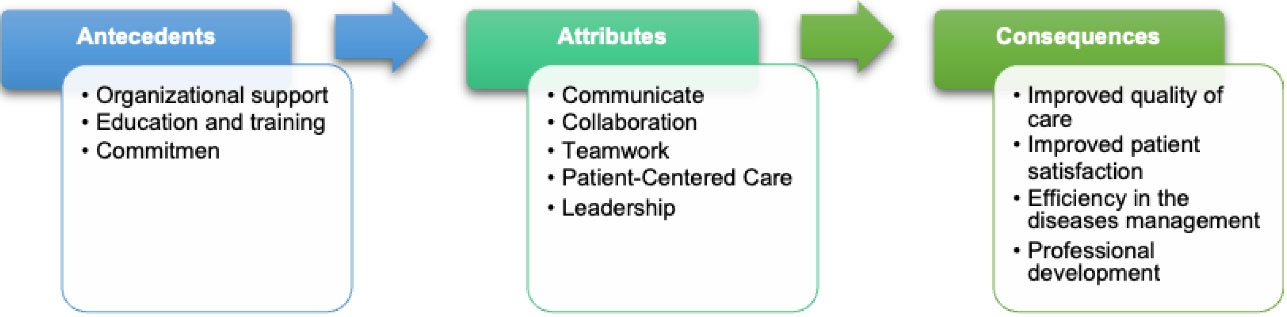
Figure 2.
Interprofessional Collaboration’s antecedents, attributes, and consequences
.
Interprofessional Collaboration’s antecedents, attributes, and consequences
Identifying Empirical Referents
The selection of empirical references is the final step in concept analysis. According to Walker & Avant21 empirical references can identify concrete indicators or variables that can be observed or measured to represent the existence or characteristics of the concept being analyzed. The use of attributes for communication can be found in the Interprofessional Collaborative Competencies Attainment Survey (ICCAS),62 Collaborative Practice Assessment Tool (CPAT),63 Collaboration and Satisfaction About Care Decisions Scale (CSACD),64 and TeamSTEPPS® Team Perceptions Questionnaire (T-TPQ).65
Collaboration attributes are found on the Assessment of Interprofessional Team Collaboration Scale (AITCS),66 Interprofessional Collaborative Competencies Attainment Survey (ICCAS),62 and Collaboration and Satisfaction About Care Decisions Scale (CSACD).64 The attributes of teamwork can be found on the Teamwork Climate Scale (ECTE),67 Collaborative Practice Assessment Tool (CPAT),63 and Interprofessional Attitude Scale (IPAS).68 Patient-centered care attributes can be found on the Interprofessional Attitude Scale (IPAS).68 And meanwhile, leadership attributes can be found on the TeamSTEPPS® Team Perceptions Questionnaire (T-TPQ).65
Discussion
In this study, we analyzed the concept of interprofessional collaboration using the Walker and Avant21 approach. The findings of this study identified five key attributes of interprofessional collaboration: Communication, teamwork, collaboration, patient-centered care, and leadership. Interprofessional collaboration is important as primary care becomes more complex and one health profession is unable to meet the client’s needs.2 It is a tenet of community health nursing that collaboration with various professions, organizations, and other entities is the most effective way to promote and protect the health of the community.69 According to Stanhope and Lancaster69 community nursing intervention strategies include health promotion, group process, empowerment, and partnership. Interprofessional collaboration is consistent with one of the community nursing intervention strategies, which is partnership.70
One key manifestation of interprofessional collaboration in community health nursing is partnership. Partnership in community health nursing is a collaboration between various health professionals and community members to provide holistic and integrated health care.71 In the context of interprofessional collaboration in primary care, this partnership enables the incorporation of the diverse knowledge, skills, and resources of each team member to provide comprehensive care according to the needs and context of the community.70 The nurse’s role as case coordinator in the community is critical to interprofessional implementation.45 In this setting, nurses play a key role in facilitating collaboration among various health care professionals and community members to provide health care services.72 With their ability to coordinate care and integrate multiple perspectives into the clinical decision-making process, nurses can help ensure that each person’s needs are appropriately addressed.28 Nurses help strengthen interprofessional relationships and the community’s ability to achieve better overall health.
These findings highlight the importance of clear and open communication in facilitating interprofessional collaboration, ensuring coordinated and effective patient care. In clinical practice, this underscores the need to develop interpersonal communication skills among healthcare professionals from various disciplines.26,37 A study conducted by Fox et al73 reported effective communication is crucial for successful interprofessional collaboration in primary care settings. Additionally, the findings emphasize the integration of different professional perspectives and knowledge into clinical decision making.39 A study reported by Donnelly et al29 explains that collaborative practice can optimally utilize each other’s competencies, practices, and skills in delivering high-quality health care in primary care.
Effective interprofessional collaboration should embrace a comprehensive approach, with leadership playing a crucial role in coordinating collaboration and fostering innovation in care delivery.50 Effective leadership can further enhance teamwork enabling healthcare professionals to work together, maximize resources and improve patient outcomes, which requires a strong understanding of how to develop teamwork skills with other healthcare professionals.28 Moreover, the focus on patient-centered care underscores the importance of considering patients’ needs and preferences, prioritizing their well-being in clinical decisions.40 A study conducted by Fox et al.73 reported that interprofessional collaboration can significantly enhance patient-centered care by ensuring that healthcare professionals from different disciplines work together harmoniously.
Nurses are often the link between various healthcare professionals by using their interpersonal skills to establish and maintain effective relationships with other members of the healthcare professionals. Duffy74 emphasizes the importance of caring-centered relationships that are at the core of nursing practice to support interprofessional collaboration through the Quality-Caring Model. Overall, these insights provide valuable guidance on key aspects of interprofessional collaboration in primary care, which can enhance the quality of patient care and strengthen connections between different disciplines within the healthcare system.
Limitation of this study was that our literature search did not directly yield definitions of the concept of interprofessional collaboration in the articles reviewed. Another limitation was the lack of access to the full text of some potentially relevant articles. Despite conducting extensive searches to find relevant articles, there is a concern that some data may not have been included in the articles. Generalization of findings requires a robust and comprehensive data set that accurately reflects the concept being studied. The conclusions drawn might be specific to the sample and articles reviewed, limiting their applicability to wider contexts.
Conclusion
A conceptual analysis using Walker & Avant’s21 approach provided comprehensive insights into interprofessional collaboration in primary care. There are five attributes of interprofessional collaboration, including communication, teamwork, collaboration, patient-centered care, and leadership. Therefore, nurses and other health professionals as a team need to implement interprofessional collaboration in the diseases management in primary care. Caring-centered relationships, which are at the core of nursing practice, play a pivotal role in supporting interprofessional collaboration.
Competing Interests
There is no conflict of interest for the authors.
Ethical Approval
None to be declared.
Research Highlights
What is the current knowledge?
What is new here?
-
This study identified the key definitions, attributes, antecedents, and consequences of the concept. The study also emphasizes the importance of caring-centered relationships, which lie at the heart of nursing practice, in supporting interprofessional collaboration.
Acknowledgements
Acknowledgment to the Faculty of Nursing, Universitas Indonesia, especially the Doctoral Study Program in Nursing that has facilitated and supported the completion of this concept analysis.
References
- Pascucci D, Sassano M, Nurchis MC, Cicconi M, Acampora A, Park D. Impact of interprofessional collaboration on chronic disease management: findings from a systematic review of clinical trial and meta-analysis. Health Policy 2021; 125(2):191-202. doi: 10.1016/j.healthpol.2020.12.006 [Crossref] [ Google Scholar]
- Rawlinson C, Carron T, Cohidon C, Arditi C, Hong QN, Pluye P. An overview of reviews on interprofessional collaboration in primary care: barriers and facilitators. Int J Integr Care 2021; 21(2):32. doi: 10.5334/ijic.5589 [Crossref] [ Google Scholar]
- Nurchis MC, Sessa G, Pascucci D, Sassano M, Lombi L, Damiani G. Interprofessional collaboration and diabetes management in primary care: a systematic review and meta-analysis of patient-reported outcomes. J Pers Med 2022; 12(4):643. doi: 10.3390/jpm12040643 [Crossref] [ Google Scholar]
- Davidson AR, Kelly J, Ball L, Morgan M, Reidlinger DP. What do patients experience? Interprofessional collaborative practice for chronic conditions in primary care: an integrative review. BMC Prim Care 2022; 23(1):8. doi: 10.1186/s12875-021-01595-6 [Crossref] [ Google Scholar]
- Bouton C, Journeaux M, Jourdain M, Angibaud M, Huon JF, Rat C. Interprofessional collaboration in primary care: what effect on patient health? A systematic literature review. BMC Prim Care 2023; 24(1):253. doi: 10.1186/s12875-023-02189-0 [Crossref] [ Google Scholar]
- Soewondo P, Pujisubekt R, Prastyani AW, Rahmayanti NM. Interprofessional collaborative practice and health workers retention at remote primary health care: case study from Nusantara Sehat team-based program. Kesmas 2022; 17(2):136-43. doi: 10.21109/kesmas.v17i2.5796 [Crossref] [ Google Scholar]
- Sirimsi MM, De Loof H, Van den Broeck K, De Vliegher K, Pype P, Remmen R. Scoping review to identify strategies and interventions improving interprofessional collaboration and integration in primary care. BMJ Open 2022; 12(10):e062111. doi: 10.1136/bmjopen-2022-062111 [Crossref] [ Google Scholar]
- Interprofessional Education Collaborative (IPEC). IPEC Core Competencies for Interprofessional Collaborative Practice: Version 3. Washington, DC: IPEC; 2023.
- Carron T, Rawlinson C, Arditi C, Cohidon C, Hong QN, Pluye P. An overview of reviews on interprofessional collaboration in primary care: effectiveness. Int J Integr Care 2021; 21(2):31. doi: 10.5334/ijic.5588 [Crossref] [ Google Scholar]
- Busari JO, Moll FM, Duits AJ. Understanding the impact of interprofessional collaboration on the quality of care: a case report from a small-scale resource limited health care environment. J Multidiscip Healthc 2017; 10:227-34. doi: 10.2147/jmdh.S140042 [Crossref] [ Google Scholar]
- Mattiazzi S, Cottrell N, Ng N, Beckman E. The impact of interprofessional education interventions in health professional student clinical training: a systematic review. J Interprof Educ Pract 2023; 30:100596. doi: 10.1016/j.xjep.2022.100596 [Crossref] [ Google Scholar]
- Wranik WD, Price S, Haydt SM, Edwards J, Hatfield K, Weir J. Implications of interprofessional primary care team characteristics for health services and patient health outcomes: a systematic review with narrative synthesis. Health Policy 2019; 123(6):550-63. doi: 10.1016/j.healthpol.2019.03.015 [Crossref] [ Google Scholar]
- Brooks L, Elliott J, Stolee P, Boscart VM, Gimbel S, Holisek B. Development, successes, and potential pitfalls of multidisciplinary chronic disease management clinics in a family health team: a qualitative study. BMC Prim Care 2023; 24(1):126. doi: 10.1186/s12875-023-02073-x [Crossref] [ Google Scholar]
- James CR, Dunning G, Connolly M, Elliott T. Collaborative practice: a model of successful working in schools. J Educ Adm 2007; 45(5):541-55. doi: 10.1108/09578230710778187 [Crossref] [ Google Scholar]
- Taberna M, Gil Moncayo F, Jané-Salas E, Antonio M, Arribas L, Vilajosana E. The multidisciplinary team (MDT) approach and quality of care. Front Oncol 2020; 10:85. doi: 10.3389/fonc.2020.00085 [Crossref] [ Google Scholar]
- Fargier P, Collet C, Moran A, Massarelli R. Inter-disciplinarity in sport sciences: the neuroscience example. Eur J Sport Sci 2017; 17(1):42-50. doi: 10.1080/17461391.2016.1207710 [Crossref] [ Google Scholar]
- Will KK, Johnson ML, Lamb G. Team-based care and patient satisfaction in the hospital setting: a systematic review. J Patient Cent Res Rev 2019; 6(2):158-71. doi: 10.17294/2330-0698.1695 [Crossref] [ Google Scholar]
- Valentijn PP, Schepman SM, Opheij W, Bruijnzeels MA. Understanding integrated care: a comprehensive conceptual framework based on the integrative functions of primary care. Int J Integr Care 2013; 13:e010. doi: 10.5334/ijic.886 [Crossref] [ Google Scholar]
- Kyaw WT, Sakakibara M. Transdisciplinary communities of practice to resolve health problems in southeast Asian artisanal and small-scale gold mining communities. Int J Environ Res Public Health 2022; 19(9):5422. doi: 10.3390/ijerph19095422 [Crossref] [ Google Scholar]
- Rodgers BL, Jacelon CS, Knafl KA. Concept analysis and the advance of nursing knowledge: state of the science. J Nurs Scholarsh 2018; 50(4):451-9. doi: 10.1111/jnu.12386 [Crossref] [ Google Scholar]
- Walker LO, Avant KC. Strategies for Theory Construction in Nursing. 5th ed. Pearson; 2014.
- Orchard CA, Sonibare O, Morse A, Collins J, Al-Hamad A. Collaborative leadership, part 2: the role of the nurse leader in interprofessional team-based practice - shifting from task- to collaborative patient-/family-focused care. Nurs Leadersh (Tor Ont) 2017; 30(2):26-38. doi: 10.12927/cjnl.2017.25257 [Crossref] [ Google Scholar]
- Alidina S, Martelli PF, Singer SJ, Aveling EL. Optimizing patient partnership in primary care improvement: a qualitative study. Health Care Manage Rev 2021; 46(2):123-34. doi: 10.1097/hmr.0000000000000250 [Crossref] [ Google Scholar]
- Grant A, Kontak J, Jeffers E, Lawson B, MacKenzie A, Burge F. Barriers and enablers to implementing interprofessional primary care teams: a narrative review of the literature using the consolidated framework for implementation research. BMC Prim Care 2024; 25(1):25. doi: 10.1186/s12875-023-02240-0 [Crossref] [ Google Scholar]
- Vasconcelos J, Probst LF, da Silva JA, da Costa MV, Higashijima MN, de Moraes Dos Santos ML. Factors associated with interprofessional collaboration in Primary Health Care: a multilevel analysis. Cien Saude Colet 2024; 29(1):e10572022. doi: 10.1590/1413-81232024291.10572022 [Crossref] [ Google Scholar]
- Huyen NT, Tsakitzidis G, Tam NM, Valcke M, Chuong HV, Wens J. Perceptions and experiences of primary healthcare providers toward interprofessional collaboration in chronic disease management in Hue, Vietnam. J Interprof Care 2024; 38(1):52-61. doi: 10.1080/13561820.2023.2227650 [Crossref] [ Google Scholar]
- Fusco NM, Ohtake PJ. Training the trainers: a preceptor development program targeting interprofessional collaboration competencies. Curr Pharm Teach Learn 2019; 11(11):1138-43. doi: 10.1016/j.cptl.2019.07.007 [Crossref] [ Google Scholar]
- Mertens F, De Gendt A, Deveugele M, Van Hecke A, Pype P. Interprofessional collaboration within fluid teams: community nurses’ experiences with palliative home care. J Clin Nurs 2019; 28(19-20):3680-90. doi: 10.1111/jocn.14969 [Crossref] [ Google Scholar]
- Donnelly C, Ashcroft R, Mofina A, Bobbette N, Mulder C. Measuring the performance of interprofessional primary health care teams: understanding the teams perspective. Prim Health Care Res Dev 2019; 20:e125. doi: 10.1017/s1463423619000409 [Crossref] [ Google Scholar]
- Smith-Carrier T, Pham TN, Akhtar S, Nowaczynski M, Seddon G, Sinha S. “A more rounded full care model”: interprofessional team members’ perceptions of home-based primary care in Ontario, Canada. Home Health Care Serv Q 2015; 34(3-4):232-51. doi: 10.1080/01621424.2015.1108892 [Crossref] [ Google Scholar]
- Morgan S, Pullon S, McKinlay E. Observation of interprofessional collaborative practice in primary care teams: an integrative literature review. Int J Nurs Stud 2015; 52(7):1217-30. doi: 10.1016/j.ijnurstu.2015.03.008 [Crossref] [ Google Scholar]
- Findyartini A, Kambey DR, Yusra RY, Timor AB, Khairani CD, Setyorini D. Interprofessional collaborative practice in primary healthcare settings in Indonesia: a mixed-methods study. J Interprof Educ Pract 2019; 17:100279. doi: 10.1016/j.xjep.2019.100279 [Crossref] [ Google Scholar]
- Waltz LA, Barnes JN, Crocker AF, Doeringer JR, Downs LT, Maki Y. Implementing a primary care simulation to improve interprofessional competencies. J Interprof Educ Pract 2023; 33:100681. doi: 10.1016/j.xjep.2023.100681 [Crossref] [ Google Scholar]
- Potthoff M, Kirkpatrick AJ, Jizba TA. Interprofessional primary palliative care: do the AACN Essentials prepare nurses for collaborative practice?. J Prof Nurs 2023; 46:197-204. doi: 10.1016/j.profnurs.2023.03.017 [Crossref] [ Google Scholar]
- Showande SJ, Ibirongbe TP. Interprofessional education and collaborative practice in Nigeria - pharmacists’ and pharmacy students’ attitudes and perceptions of the obstacles and recommendations. Curr Pharm Teach Learn 2023; 15(9):787-800. doi: 10.1016/j.cptl.2023.07.013 [Crossref] [ Google Scholar]
- LaMothe J, Hendricks S, Halstead J, Taylor J, Lee E, Pike C. Developing interprofessional collaborative practice competencies in rural primary health care teams. Nurs Outlook 2021; 69(3):447-57. doi: 10.1016/j.outlook.2020.12.001 [Crossref] [ Google Scholar]
- Selleck CS, Fifolt M, Burkart H, Frank JS, Curry WA, Hites LS. Providing primary care using an interprofessional collaborative practice model: what clinicians have learned. J Prof Nurs 2017; 33(6):410-6. doi: 10.1016/j.profnurs.2016.11.004 [Crossref] [ Google Scholar]
- Schentrup D, Whalen K, Black E, Blue A, Chacko L. Building interprofessional team effectiveness in a nurse-led rural health center. J Interprof Educ Pract 2018; 12:86-90. doi: 10.1016/j.xjep.2018.05.008 [Crossref] [ Google Scholar]
- Sangaleti C, Schveitzer MC, Peduzzi M, Zoboli E, Soares CB. Experiences and shared meaning of teamwork and interprofessional collaboration among health care professionals in primary health care settings: a systematic review. JBI Database System Rev Implement Rep 2017; 15(11):2723-88. doi: 10.11124/jbisrir-2016-003016 [Crossref] [ Google Scholar]
- de Brito GE, Benício de Sá JGS, de Andrade AJ, Forte FD, Batiston AP, da Costa MV. Dimensions of interprofessional collaboration in the dynamics of the expanded family health and primary care centers: a qualitative study. J Interprof Care 2022; 36(5):676-83. doi: 10.1080/13561820.2021.1977618 [Crossref] [ Google Scholar]
- de Sousa Mata ÁN, de Azevedo KP, Braga LP, de Medeiros GC, de Oliveira Segundo VH, Bezerra IN. Training in communication skills for self-efficacy of health professionals: a systematic review. Hum Resour Health 2021; 19(1):30. doi: 10.1186/s12960-021-00574-3 [Crossref] [ Google Scholar]
- Brommelsiek M, Graybill TL, Gotham HJ. Improving communication, teamwork and situation awareness in nurse-led primary care clinics of a rural healthcare system. J Interprof Educ Pract 2019; 16:100268. doi: 10.1016/j.xjep.2019.100268 [Crossref] [ Google Scholar]
- Abdulla NM, Naqi RJ, Jassim GA. Barriers to nurse-patient communication in primary healthcare centers in Bahrain: patient perspective. Int J Nurs Sci 2022; 9(2):230-5. doi: 10.1016/j.ijnss.2022.03.006 [Crossref] [ Google Scholar]
- Leonardsen AL, Bjerkenes A, Rutherford I. Nurse competence in the interface between primary and tertiary healthcare services. Nurs Open 2019; 6(2):482-92. doi: 10.1002/nop2.230 [Crossref] [ Google Scholar]
- Granrud MD, Anderzèn-Carlsson A, Bisholt B, Steffenak AK. Public health nurses’ perceptions of interprofessional collaboration related to adolescents’ mental health problems in secondary schools: a phenomenographic study. J Clin Nurs 2019; 28(15-16):2899-910. doi: 10.1111/jocn.14881 [Crossref] [ Google Scholar]
- Wiarsih W, Sahar J, Nursasi AY. A qualitative study: interprofessional collaboration practice in Indonesian primary healthcare. Nurs Manag 2023; 54(5S):13-8. doi: 10.1097/nmg.0000000000000010 [Crossref] [ Google Scholar]
- Keshmiri F. Exploring the experiences of the team members in the interprofessional socialization process for becoming a interprofessional collaborator. BMC Nurs 2022; 21(1):366. doi: 10.1186/s12912-022-01147-y [Crossref] [ Google Scholar]
- Aladwani M, Hindi A, Wakefield A, Willis S, Hall J. Exploring factors influencing implementation of interprofessional education in undergraduate healthcare programmes: a multiple-case study. J Interprof Care 2024; 38(2):273-82. doi: 10.1080/13561820.2023.2289508 [Crossref] [ Google Scholar]
- Suprapto S, Mulat TC, Lalla NS. Nurse competence in implementing public health care. Int J Public Health Sci 2021; 10(2):428-32. doi: 10.11591/ijphs.v10i2.20711 [Crossref] [ Google Scholar]
- Djaharuddin I, Aras I, Masadah R, Yusuf I, Idris I, Rasyid H. Factors influencing the implementation of interprofessional collaborative practice in teaching hospital setting: a mixed-method study. J Adv Med Educ Prof 2023; 11(4):213-21. doi: 10.30476/jamp.2023.98987.1821 [Crossref] [ Google Scholar]
- Slater CE, Keefe B, Jacobs K. Impact of the Interprofessional Leadership in Healthcare Certificate on health professionals’ collaboration and leadership abilities. J Interprof Educ Pract 2023; 32:100658. doi: 10.1016/j.xjep.2023.100658 [Crossref] [ Google Scholar]
- Hu Y, Broome M. Leadership characteristics for interprofessional collaboration in China. J Prof Nurs 2020; 36(5):356-63. doi: 10.1016/j.profnurs.2020.02.008 [Crossref] [ Google Scholar]
- Bornman J, Louw B. Leadership development strategies in interprofessional healthcare collaboration: a rapid review. J Healthc Leadersh 2023; 15:175-92. doi: 10.2147/jhl.S405983 [Crossref] [ Google Scholar]
- van der Gulden R, Scherpbier-de Haan ND, Greijn CM, Looman N, Tromp F, Dielissen PW. Interprofessional education and collaboration between general practitioner trainees and practice nurses in providing chronic care; a qualitative study. BMC Med Educ 2020; 20(1):290. doi: 10.1186/s12909-020-02206-1 [Crossref] [ Google Scholar]
- Khan AI, Barnsley J, Harris JK, Wodchis WP. Examining the extent and factors associated with interprofessional teamwork in primary care settings. J Interprof Care 2022; 36(1):52-63. doi: 10.1080/13561820.2021.1874896 [Crossref] [ Google Scholar]
- Rioux-Dubois A, Perron A. Enacting primary healthcare interprofessional collaboration: a multisite ethnography of nurse practitioner integration in Ontario, Canada. J Interprof Care 2023; 37(4):532-40. doi: 10.1080/13561820.2022.2102591 [Crossref] [ Google Scholar]
- Rahmanida N, Bachtiar A. Interprofessional collaboration on non-communicable disease programs (NDP) in primary health services. Devotion 2022; 3(8):707-15. doi: 10.36418/dev.v3i08.172 [Crossref] [ Google Scholar]
- Mulvale G, Embrett M, Razavi SD. ‘Gearing Up’ to improve interprofessional collaboration in primary care: a systematic review and conceptual framework. BMC Fam Pract 2016; 17:83. doi: 10.1186/s12875-016-0492-1 [Crossref] [ Google Scholar]
- Kechichian A, Lapalme JG, Lowry V, Pinsault N, Desmeules F. Interprofessional collaboration interventions in primary care for patients with musculoskeletal disorders: a scoping review. J Interprof Educ Pract 2023; 31:100621. doi: 10.1016/j.xjep.2023.100621 [Crossref] [ Google Scholar]
- Sockalingam S, Rajaratnam T, Gambin A, Soklaridis S, Serhal E, Crawford A. Interprofessional continuing professional development programs can foster lifelong learning in healthcare professionals: experiences from the Project ECHO model. BMC Med Educ 2022; 22(1):432. doi: 10.1186/s12909-022-03500-w [Crossref] [ Google Scholar]
- Carney PA, Thayer EK, Palmer R, Galper AB, Zierler B, Eiff MP. The benefits of interprofessional learning and teamwork in primary care ambulatory training settings. J Interprof Educ Pract 2019; 15:119-26. doi: 10.1016/j.xjep.2019.03.011 [Crossref] [ Google Scholar]
- Archibald D, Trumpower D, MacDonald CJ. Validation of the interprofessional collaborative competency attainment survey (ICCAS). J Interprof Care 2014; 28(6):553-8. doi: 10.3109/13561820.2014.917407 [Crossref] [ Google Scholar]
- Schroder C, Medves J, Paterson M, Byrnes V, Chapman C, O’Riordan A. Development and pilot testing of the collaborative practice assessment tool. J Interprof Care 2011; 25(3):189-95. doi: 10.3109/13561820.2010.532620 [Crossref] [ Google Scholar]
- Baggs JG. Development of an instrument to measure collaboration and satisfaction about care decisions. J Adv Nurs 1994; 20(1):176-82. doi: 10.1046/j.1365-2648.1994.20010176.x [Crossref] [ Google Scholar]
- Agency for Healthcare Research and Quality. TeamSTEPPS® Team Perceptions Questionnaire (T-TPQ). Available from: https://www.ahrq.gov/sites/default/files/wysiwyg/teamstepps/instructor/reference/teamperceptionsmanual.pdf.
- Orchard C, Pederson LL, Read E, Mahler C, Laschinger H. Assessment of Interprofessional Team Collaboration Scale (AITCS): further testing and instrument revision. J Contin Educ Health Prof 2018; 38(1):11-8. doi: 10.1097/ceh.0000000000000193 [Crossref] [ Google Scholar]
- Silva MC, Peduzzi M, Sangaleti CT, da Silva D, Agreli HF, West MA. Cross-cultural adaptation and validation of the teamwork climate scale. Rev Saude Publica 2016; 50:52. doi: 10.1590/s1518-8787.2016050006484 [Crossref] [ Google Scholar]
- Norris J, Carpenter JG, Eaton J, Guo JW, Lassche M, Pett MA. The development and validation of the interprofessional attitudes scale: assessing the interprofessional attitudes of students in the health professions. Acad Med 2015; 90(10):1394-400. doi: 10.1097/acm.0000000000000764 [Crossref] [ Google Scholar]
- Stanhope M, Lancaster J. Public Health Nursing: Population-Centered Health Care in the Community. 10th ed. Elsevier; 2020.
- Hoffman JL, Cowdery JE. Interprofessional collaboration in public health. Nurs Educ Perspect 2021; 42(1):46-8. doi: 10.1097/01.Nep.0000000000000591 [Crossref] [ Google Scholar]
- Akbar MA, Sukemi S, Wabula R, Kurniawan D, Amir H. Healthcare providers’ interprofessional collaboration experience with integrated information system for non-communicable disease management at primary care in Indonesia: a qualitative study. Int J Community Based Nurs Midwifery 2025; 13(3):191-201. doi: 10.30476/ijcbnm.2025.106621.2773 [Crossref] [ Google Scholar]
- Akbar MA, Sahar J, Rekawati E, Sartika RA, Gupta P. The effect of community-based intervention on people with type 2 diabetes mellitus: systematic review. Public Health Indones 2025; 11(S1):39-51. doi: 10.36685/phi.v11iS1.884 [Crossref] [ Google Scholar]
- Fox S, Gaboury I, Chiocchio F, Vachon B. Communication and interprofessional collaboration in primary care: from ideal to reality in practice. Health Commun 2021; 36(2):125-35. doi: 10.1080/10410236.2019.1666499 [Crossref] [ Google Scholar]
- Duffy JR. Quality Caring in Nursing and Health Systems: Implications for Clinicians, Educators, and Leaders. 4th ed. Springer Publishing Company; 2022.