Journal of caring sciences. 14(2):116-126.
doi: 10.34172/jcs.025.33452
Original Article
Public Awareness of Stroke Symptoms in Developed and Developing Countries: A Systematic Review
Mina Zeinalzadeh Conceptualization, Formal analysis, Investigation, Methodology, Project administration, Validation, Writing – review & editing, 1 
Elisa Atalou Formal analysis, Investigation, Methodology, Project administration, Project administration, Writing – original draft, 2
Alireza Ala Data curation, Funding acquisition, Investigation, Methodology, Project administration, Supervision, 2
Masoumeh Poureskandari Data curation, Investigation, Project administration, Writing – original draft, 2
Samad Shams Vahdati Conceptualization, Data curation, Funding acquisition, Investigation, Methodology, Project administration, Resources, Visualization, 2, *
Author information:
1Anatomy Group, Faculty of Medicine, Tabriz University of Medical Sciences, Tabriz, Iran
2Emergency and Trauma Care Research Center, Tabriz University of Medical Sciences, Tabriz, Iran
Abstract
Introduction:
Lack of knowledge about the main clinical manifestations of stroke is a major health problem, which leads to prolongation of the time elapsed from the onset of stroke to hospital admission, late diagnosis and, consequently, delay in the initiation of appropriate treatment. The aim of this review is to investigate the levels of awareness of stroke signs, symptoms and risk factors.
Methods:
In this study, all articles from January 1990 to December 2023 were included through searching PubMed, EMBASE, Google Scholar, Scopus and WOS databases. Only articles written in English or Persian were entered. The level of awareness of General public (not patients with stroke and not experts) about the warning signs and symptoms of stroke between developed and developing countries has been compared.
Results:
The results of this study have shown that the level of awareness of public in developed countries is not differ compared with developing countries.
Conclusion:
Overall, there is no discernible correlation between a country’s developmental status and the awareness of stroke symptoms by public. Educational initiatives in schools and media are potential strategies to enhance public knowledge.
Keywords: Stroke, Symptoms, Developed, Developing
Copyright and License Information
© 2025 The Author(s).
This work is published by Journal of Caring Sciences as an open access article distributed under the terms of the Creative Commons Attribution Non-Commercial License (
http://creativecommons.org/licenses/by-nc/4.0/). Non-commercial uses of the work are permitted, provided the original work is properly cited.
Funding Statement
The study is a self-funded study.
Introduction
Stroke is one of the leading causes of disability and is the third cause of death worldwide. Stroke is a neurological emergency that refer patients to the stroke center. Early diagnosis of stroke improves survival. So, these centers have reduced disability after stroke by about 18%.1
Diagnosing the type of stroke is one of the key factors. It is necessary to use a scan to distinguish between different types of stroke, which is not available in all medical centers. This shortage leads to loss of golden time for patients. The symptoms of hemorrhagic stroke include nausea, sudden headache and increased blood pressure, but the symptoms of ischemic stroke include ataxia, numbness, paralysis of limbs and vision problems.2
Based on the results of a review study, the hospitalization rate of people with stroke has decreased in high-income countries such as Southeast Asia, Western Europe, and North America.3 But in China, it has been determined that less 28% of people know the symptoms of stroke, especially high-risk people were not aware of these symptoms. In one study, it has been determined that educated and elderly people, especially women, have more information about stroke symptoms. The study conducted in China has shown that participants recognized numbness (67.6%), face distortion (66.7%), speech disorder (65.2%) and confusion (11.5%) as stroke symptoms.4
In a study conducted in Singapore, participants considered unilateral numbness and weakness (92.7%), walking disorders (81.2%), and speech disorders (78.8%) as stroke symptoms.5 Bhat and co-workers’ study using a questionnaire to investigate public awareness and showed that 52.7% of participants had a good information about stroke symptoms, but 73% them did not have information about the golden time for stroke treatment. Also, age, gender, and income were not the predictors of knowledge.6In another study that conducted in Iran, it was determined that only 44.2% of people are aware that if stroke symptoms appear, they should go to the medical center within three hours. Urbanization, level of education and previous experience of stroke are the factors affecting awareness about stroke in this study.7In the study conducted by Baldereschi et al in Italy, it was determined that about 26.2% of people knew about tissue plasminogen activator tissue plasminogen activator (tPA) treatment and 59% of people informed the emergency medical services (EMS) when they had a stroke. People with higher education called the EMS faster.8
The aim of this review is to investigate the levels of awareness of stroke signs, symptoms and risk factors. Drawing these results together will provide readers with insight into different communities’ understanding of stroke, thereby highlighting areas where improvements can be made with targeted campaigns. Although many studies have been conducted to investigate public knowledge about stroke in Western countries, very little attention has been paid to this important issue in developing countries, especially in Iran. In addition, considering the significant increase in the incidence of stroke in developing countries, especially in Iran, the findings of such a study may help us to map our knowledge about stroke. This will help us to adopt more effective, comprehensive education programs to increase public knowledge about stroke and thereby reduce the burden of stroke.
Materials and Methods
The search strategy was based on keywords obtained from Medical Subject Headings (MeSH). Based on this search strategy we searched PubMed, Excerpta Medica Database (EMBASE), Scopus, Web of Science, and Google Scholar. All the references of the selected articles were read manually reviewed to ensure that no study was missed. The search was conducted from early January 1990 to December 2023. Our search strategy was: “Knowledge” OR “Public Knowledge” OR “Knowledge of public” OR “Information” OR “public information” OR “information of public” OR “Public Awareness” OR “Awareness” OR “Awareness of public” AND “stroke” OR “ischemic stroke” OR “ hemorrhagic stroke” OR “CVA” OR “Cerebrovascular accident” OR “neurovascular accident” OR “cerebral infarction” OR “Infarction of Cerebra” AND “Developing country” OR “Developed country” OR “Developing and developed country” OR “In developing country”
Inclusion criteria
In this comprehensive and systematic review study, all the main articles related to people’s knowledge and awareness about stroke and its symptoms, from January 1990 to December 2023, were included. Also, only articles written in English or Persian were entered.
Exclusion criteria
Articles with non-English languages, case studies and case reports and studies before 1990 were excluded. Also, studies that did not have the required quality and did not cover specific objectives were excluded from the study.
Our search strategy focused on three things: the type of studies (original articles), the target population, which included the general public, the intervention, which did not have an intervention, and the results (level of awareness).
This study was conducted based on PRISMA search criteria (Figure 1). After searching the articles with the mentioned keywords and extracting them from the desired databases, they were evaluated by two researchers, and the disputed cases between the two researchers were referred to a third person. First, the titles of all the articles were checked and the articles with were not compatible with the study, were excluded. In the next steps, the abstract and the full text of the articles were reviewed to identify and discard the studies that include the exclusion criteria and are weakly related to the study objectives. In the initial search of databases, 17 200 articles were found, of which 348 duplicate articles were removed by Endnote software. Then, a number of duplicate articles were removed manually. After removing unrelated articles, shared between databases, weak connection with the study objectives, and articles that included exclusion criteria, the selected articles were thoroughly studied and reviewed, and the information required for systematic review using the extraction table in The Excel software of the Office collection was extracted and summarized. Endnote X21 software was used to organize, read titles and abstracts, and identify duplicates.
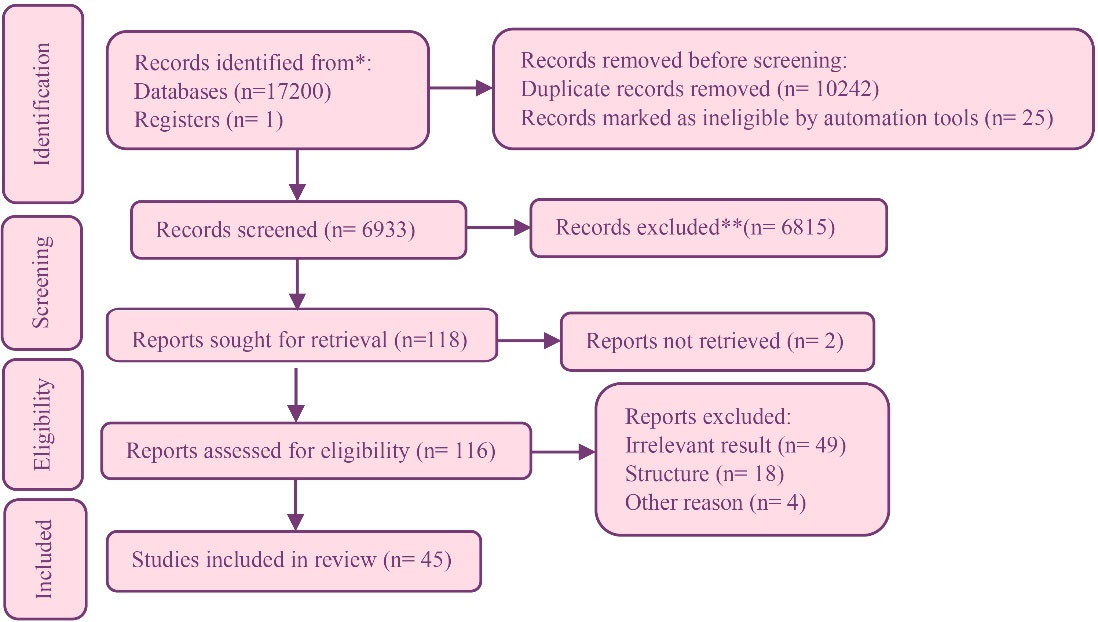
Figure 1.
PRISMA flowchart: Number of studies based on results reviewed in the primary search. Finally, 45 studies were reviewed
.
PRISMA flowchart: Number of studies based on results reviewed in the primary search. Finally, 45 studies were reviewed
Results
Based on the literature review, the following results are reported in order in line with the study objectives:
Developing Country
Arabic Countries
In contrast to prior research conducted within this nation, which indicated a lack of knowledge among individuals,9 the present study reveals a noteworthy level of awareness regarding stroke among affluent young individuals.
Naguib conducted a cross-sectional study that encompassed questions in both Arabic and English, focusing on stroke symptoms, actions taken during a stroke, and associated risk factors. The study revealed an average age of 27.7 years, with 50.2% of participants having a university education. Known symptoms such as speech disturbance and loss of sensation were reported. Additionally, over 70% of individuals stated that they promptly informed the emergency department within the initial three hours of experiencing a stroke. Furthermore, it was observed that younger individuals with higher education possessed knowledge of more than five stroke risk factors.10
In 2015, a cross-sectional study was carried out by Nansseu et al. The study consisted of two parts: the first part involved questions regarding medical history and demographic characteristics, while the second part comprised 28 questions concerning warning signs of stroke and its complications. A total of 1025 individuals aged between 18 and 83 years participated in the study. It was found that approximately 99% of the participants were familiar with the term “stroke” and recognized it as a preventable condition. Moreover, 98.3% of the individuals identified speech disorder as a common symptom. The overall knowledge score was calculated to be 81.3 )with 25th-75th percentiles ranging from 75% to 89.3%). The study revealed that older individuals with higher levels of education, elevated blood pressure, and a history of stroke possessed more comprehensive knowledge on the subject.11
Farrag et al’s study was conducted to investigate people’s information about stroke and its actions in Egypt. People were asked in Arabic language and four different parts of Egypt. About 38.6% of people had primary education and (37.3%) had university education. More than half of people considered facial distortion as one of the common symptoms. Most people consider blood pressure control as an effective way to deal with stroke. At the time of stroke, about 37.3% say that they do not go to the hospital and 34.3% go to the emergency room, but a very small percentage of people, 8.8%, knew about tPA treatment. This study showed that there is little information about stroke in the Egyptian population.12In Taiwan, a study on stroke information was conducted by Chan et al. Most of the participants were women. 57.89% of the people stated that the brain is the first organ to be damaged in a stroke. About 12.12% of the elderly participants could name 6 stroke risk factors, but 46.97% of them said that they call the emergency room when they have a stroke. In this study, the lack of awareness of people about World Stroke Day also showed that weak announcements and information can be considered effective.13
A study was conducted in the eastern region of Saudi Arabia after the coronavirus subsided to check the information of the community. In this study, WhatsApp was used instead of a paper questionnaire. (74.7%) people had an average income and 72.1% had a university education. About half of the people (51.3%) did not know if there was a stroke treatment or not, and (53.3%) people contact emergency services when a stroke occurs. take people had poor information about stroke (76%) and there is a significant relationship between people’s information with income and education and their history of illness. (P value = 0.004, 0.001, < 0.001 respectively).14A study was also conducted in 2019 by Alluqmani et al in the city of Medina for the same purpose. About half of the 521 people who participated in the study had a correct definition of ischemic stroke. 63.8% of the people considered speech disorder to be a common symptom of stroke and a high percentage (88.6%) considered going to the emergency room as the best solution. People over 40 years old who had a history of stroke had good information in this field (P ≤ 0.05). However, in this study, the gender of people and the level of education did not have a significant effect on people’s information (P > 0.05). In their study, there was a need to increase people’s awareness about stroke in this city.15A study was conducted in the city of Taif, Saudi Arabia from 2020 to 2021. The stroke information questionnaire was designed in a true-false manner, with each correct answer having one point. In this study, people under 40 years of age had good information about stroke (P = 0.002). The relationship between the gender and knowledge in this study was significant (P < 0.001), smokers also had good information (P < 0.05). Most people (84.5%) considered the wrong lifestyle as an effective factor in causing stroke. Only 42.6% considered stroke as a preventable disease. Although a high percentage of people considered stroke as an emergency condition, the information on people in Taif city is still poorly estimated.16A study was conducted by Alkhalifah et al in Saudi Arabia in 2020. 63% of the participants were female. People between the ages of 15-30 responded well to questions about stroke warning signs (P = 0.035) Similar to the size of most community studies (84.8%), blood pressure is considered the main cause of stroke.17Alzayer et al conducted a study in Saudi Arabia in 2022 in order to investigate the general information of people in Saudi Arabia. Most people (81.2%) consider immobility to be an important risk factor for stroke, and 79.9% of people consider speech disturbance to be a worrying sign of stroke. Less than half of the people said that they go to the hospital when they have a stroke. People with higher education and jobs, especially in the medical field, had good information about stroke symptoms.18Alaqeel et al also conducted a study in Riyadh in 2011. The results showed that few people knew the risk factors of stroke, and for example, about 33.4% knew hypertension as a risk factor. In this study, higher education had no significant relationship with people’s knowledge. About (53.3%) of the people considered stroke injuries as irreparable. All the people present in this study wanted to receive more information.19A joint study was conducted in the countries of Qatar, Kuwait, Bahrain, the United Arab Emirates, Oman, and Saudi Arabia. Out of thousands of people included in the study, only 29.04% had heard the name of stroke. Women, especially people who had a history of stroke, had more knowledge about stroke (P < 0.05). In this study, being young and having a high education had a significant relationship with people’s knowledge.20
Africa
In Ghana, the rate of stroke is increasing and the high mortality rate of this disease can be attributed to the lack of people’s information, for this purpose a study was designed by Donkor et al in 2012. 75% of the people admitted that they go to the hospital when they have a stroke, but people had poor information about the symptoms of a stroke and did not consider speech and vision disturbances as symptoms of a stroke.21
Iran
In Iran, as one of the developing countries, the prevalence of stroke is increasing, especially among young people. A study was conducted by Saadatnia and colleagues at Al-Zahra Hospital in Isfahan for this purpose. 27.2% of the people knew about the high prevalence of stroke in Iran. The participants named blood pressure and stress as two important factors causing stroke (83.7%, 75.8%, respectively). Unlike most studies, a small percentage of people, 45.3%, recognized speech disturbance as a common symptom. Higher education, P < 0.001, and living in the city, P < 0.05, have a significant relationship with people’s knowledge about stroke. Although 19.3% of people consider traditional treatments to be effective, these treatments have dangerous side effects in the case of stroke.7 Imam Reza Hospital, recognized as the primary facility for stroke treatment in Tabriz, was the focus of another study. A notable finding was that 71.2% of individuals could not identify stroke symptoms, while 4.3% reported speech issues and 17.3% could mention three stroke risk factors. Residents of larger areas had more information (P < 0.01). The study found no significant link between gender and knowledge (P = 0.1). Surprisingly, only 59% mentioned calling emergency services during a stroke, and a mere 1.1% were aware of tPA treatment.22 In 2012, a study conducted in the northern city of Iran by Hosseininezhad et al revealed that 90.9% of participants believed that a patient should seek hospital care within three hours of experiencing a stroke, with 82.3% identifying hypertension as a significant cause of stroke. The study found a significant relationship between participants’ education level (P = 0.006), occupation (P < 0.001), and history of stroke (P < 0.001) with their knowledge.23 Additionally, a separate face-to-face survey and interview conducted in Shiraz in 2008 included 69 questions about personal information and attitudes towards stroke. Gender was not found to have a significant relationship with knowledge of stroke (P = 0.164), but education (P = 0.009) and income (P = 0.012) positively influenced participants’ knowledge of stroke symptoms. These studies highlight the importance of implementing a training program in Iran to increase awareness and knowledge about stroke.24
India
In 2018, a study conducted in India by Sirisha et al aimed to explore people’s knowledge and perceptions of stroke. The study included participants aged 15-40, with 41.2% of them mistakenly identifying stroke as a heart attack. Higher education was found to be significantly associated with greater knowledge about stroke (P < 0.001). The most commonly recognized symptom of stroke was limb weakness, cited by 40.4% of participants. Surprisingly, less than half of the participants reported that they would seek medical attention if they experienced stroke symptoms.25 A similar study conducted in northwest India in 2002 by Pandian et al found that 30.8% of participants defined stroke as a vascular obstruction, while 62.2% associated paralysis in the limbs with stroke warning signs. Higher education and being Hindu were linked to better knowledge of stroke risk factors (P < 0.05). Television was the primary source of information for 39.9% of participants, while only 7.4% believed that using aspirin during stroke symptoms could be effective.26 A study conducted in South India in 2012 by Menon et al revealed that 62% of individuals had limited knowledge about strokes. Those with higher education were found to have a better understanding of strokes, with statistical significance for both gender and education level. The study also found that the average time it took for individuals to seek medical help during a stroke was approximately 10 hours, well beyond the recommended maximum of 4.5 hours.27 Insufficient knowledge about stroke symptoms and risk factors was also observed in patients discharged from a hospital in West Bengal, India between 2003 and 2006. There is a pressing need for educational programs, particularly in medical centers, to address this lack of awareness.28
China
Sun et al conducted a study in urban areas of China where the average age of participants was 55.72. The study found that 87.7% of people believed hypertension played a significant role in causing strokes, and that the use of anti-diabetic and antihypertensive drugs was effective in treating strokes. Age and level of education were found to have a significant relationship with people’s knowledge (P < 0.001). Additionally, 74.4% of participants considered television to be an effective tool for information dissemination.29 Similarly, Li et al conducted a study in China in 2017 with a similar focus. In this study, around two-thirds of participants reported calling the EMS in the event of a stroke, which was an increase compared to previous studies. Interestingly, the study found that individuals living with their children were less likely to call the EMS services, instead opting to contact other family members for help.30
Other Countries
Farooq and Darain conducted a study in Islamabad where 65% of participants were unaware of the signs and symptoms of stroke.31 Evci et al also conducted a survey in Turkey in 2005, with 59.9% of participants being women. The study found that knowledge about stroke warning signs was significantly related to age, high school education, marriage, and high income. One-fifth of elderly individuals and those with lower education levels were found to lack knowledge about stroke, suggesting the need for educational programs.32 Chang et al conducted a study in Sri Lanka, where over 90% of participants were aware of stroke risk factors, but a small percentage mentioned hypertension and diabetes. Factors such as male gender, low education, and limited access to media were identified as barriers to information.33 Campos-Sousa et al conducted a study in urban areas of Brazil in 2005, where 37.8% of participants were unaware of stroke risk factors. Factors such as age, gender, education level, and income were found to be significantly related to knowledge about stroke risk factors. While 58.6% of participants could mention at least one stroke symptom, a high percentage (93.6%) mentioned seeking medical attention when symptoms appear.34
Developed Countries
Europe
Stroke is a significant cause of death in developed countries, with less than ten percent of individuals seeking hospital care when experiencing a stroke. Lundelin et al found that 81% of participants reported going to the hospital during a stroke, with older individuals and those with lower education levels being less likely to do so.35 Ramírez-Moreno et al conducted a study in Spain in 2008, with 59.8% of participants being women. Gender did not show a significant correlation with individuals’ knowledge about stroke symptoms. A no 6.5% of participants were unaware of stroke symptoms, with those under 65 years old demonstrating better awareness. Interestingly, individuals with a history of stroke did not exhibit greater knowledge compared to others. Overall, the study concluded that the level of knowledge about stroke symptoms among participants was insufficient.36
In a 2012 study conducted in England by Slark et al individuals were surveyed about their knowledge of stroke symptoms. The results indicated that there was no significant correlation between gender, age, and knowledge of stroke symptoms (P > 0.05). Furthermore, there was a lack of awareness among individuals who had experienced a stroke.37 A review conducted in 2010 by Lecouturier et al aimed to investigate how individuals respond during a stroke. The review of various studies on stroke symptom awareness revealed that most individuals could identify at least one common symptom of stroke, regardless of their gender or age. Interestingly, around 44% of individuals did not seek emergency medical help, except for those experiencing movement symptoms who perceived greater danger and sought medical attention promptly. This study highlights the importance of educational programs focusing on stroke symptoms, as increased awareness can lead to quicker medical intervention and reduced delays in seeking treatment.38
Parahoo et al conducted a study in Ireland involved 892 participants who completed a questionnaire. The level of education was found to be directly related to the participants’ knowledge. Most individuals identified weakness and speech disturbances as warning signs of a stroke. A majority (67.8%) reported receiving information from family and friends, highlighting the importance of increasing awareness in these areas.39Stroke care involves four crucial steps: recognizing symptoms quickly and accurately, contacting medical services, transferring to a well-equipped hospital, and receiving a correct diagnosis and treatment. Efforts are needed to enhance public knowledge about stroke, as revealed in a 2009 telephone survey where only 23.7% correctly identified stroke as a blood clot in the brain. Many participants identified overweight and smoking as significant risk factors for stroke. When asked about their response during a stroke attack, 47.1% mentioned contacting medical services. Interestingly, older age and residing in non-urban areas were associated with a lower likelihood of contacting an ambulance in case of a stroke (P < 0.001).40 In a study conducted by Hickey et al on individuals aged over 65, it was found that 54% of participants identified speech disorders as a symptom. Those with higher education levels and residing in the Republic of Ireland showed a significant association with having more information (P < 0.001). During interviews, participants highlighted blood pressure as a crucial risk factor, but were unaware of other factors. Smokers and individuals who did not exercise were less knowledgeable about risk factors (P < 0.01).41 A separate review study by Jones et al emphasized the importance of the way questions are asked, as it directly impacts the response rate. Only 36% of participants mentioned hypertension when asked open-ended questions. Additionally, individuals were more inclined to seek treatment if symptoms of motor weakness were present. The study also revealed that elderly individuals with lower levels of education would benefit from additional training.42
Baldereschi et al also conducted research on this topic in Italy, where over half of the participants were women. When asked to define a stroke, only 55% mentioned the brain as the affected organ. Gender did not play a significant role in the responses regarding stroke symptoms. While 59% of participants said they would go to the hospital during a stroke, they lacked knowledge about treatment options such as tPA.8
In a study conducted by Ntaios et al in Greece in 2014, a telephone survey revealed that 63.7% of participants believed that calling an ambulance promptly could improve stroke symptoms. Despite the average level of knowledge among participants regarding stroke symptoms in Greece, there is still room for improvement in reaching an optimal level of understanding.43
In a 2008 interview conducted in Denmark, participants were asked about demographic characteristics, four common stroke symptoms, and 3 important stroke risk factors. The average age of the participants was over fifty, with only ten percent able to correctly name all four stroke symptoms. Interestingly, increasing age was found to be associated with greater knowledge about stroke symptoms, while education level did not have a significant impact.44 A study conducted by Neau et al in France over a period of 2 months revealed that 62.3% of participants were able to identify numerous stroke risk factors, regardless of their level of education. However, when asked about warning signs, 50.1% were unable to provide an answer. Age, access to educational materials, and location were found to be significantly related to participants’ knowledge of stroke warning signs.45
A study conducted in Norway found that 66.6% of participants were aware that numbness in the body or face is a common symptom of stroke. The study used open-ended questions in interviews and revealed a significant relationship between gender, young age, and knowledge about stroke symptoms (P > 0.001).46 In a similar study in Sweden by Nordanstig et al it was found that most people attribute smoking as a major factor in causing strokes. Additionally, 65% of participants reported calling the EMS services when experiencing stroke symptoms. Interestingly, the study also showed that as age increases, the likelihood of contacting medical professionals during a stroke event decreases.47
In a study conducted by Wiszniewska et al in Poland, it was found that 59.7% of the participants were women. Over 90% of the respondents identified hypertension as a significant risk factor for stroke and mentioned they would seek medical attention if they experienced any stroke symptoms. However, more than half of the participants were unaware of the treatment options available, with a higher percentage in rural areas (82.2%) compared to urban areas (64.6%).48Another study with a similar focus was carried out in southern Poland, where over 90% of the participants, especially women, emphasized the importance of seeking medical help for stroke. When asked about stroke prevention, 60% mentioned physical activity and approximately 23% believed in the effectiveness of aspirin.49
Asia
In Saudi Arabia, Basfar et al conducted a study in 2010 with the aim of assessing knowledge about stroke symptoms. The study found that only 34% of participants had sufficient information about stroke symptoms, despite the majority being young, educated females.50 In Riyadh, a similar study was conducted with participants under the age of thirty, mostly women. The research revealed that while a large percentage of participants preferred going to the hospital in case of a stroke, 86.2% of them did so within 24 hours. Women and educated young individuals showed a higher ability to recognize stroke risk factors.10Osama et al conducted a study in Egypt, investigating people’s knowledge about stroke in urban and rural areas. The study found that 63.2% of participants obtained information about stroke by observing individuals with the disease. However, when asked to name the risk factors of stroke, 68.6% of participants did not have an answer, with the majority residing in non-urban areas. Furthermore, 63.2% of participants believed they should go to the hospital within 4 hours of experiencing stroke symptoms. The study also highlighted the significant relationship between seeking medical attention promptly and survival rates in urban areas (P < 0.01).51In 2011, Kim et al, surveyed 1,000 individuals in Korea regarding the issue and discovered that only 33% of respondents indicated they would call EMS services in the event of a stroke, with older individuals being more inclined to call an ambulance. Additionally, over fifty percent of participants reported obtaining information about stroke through television.52
Australia
In 1999, Yoon et al conducted a telephone interview in Australia where participants identified smoking as the primary cause of stroke (39.4%). Walking disorder and numbness were mentioned as the main symptoms by 3.6% to 9.0% of individuals. Those who were younger, more educated, or had a history of heart disease or stroke were found to have better knowledge about stroke.53 Similarly, Spark and colleagues in South Australia found that 12% of participants could not identify any stroke risk symptoms. Individuals with a history of stroke or heart disease did not demonstrate greater awareness of stroke symptoms.54
Nicol and Thrift conducted a comprehensive review of various studies in this field and discovered that the way questions are posed can significantly impact how people respond. Rather than providing a general answer, individuals tend to select symptoms from a predetermined list when questioned.55 Sug Yoon et al conducted a study in 1999 comparing the knowledge of individuals residing in urban and rural areas of Australia. While 21.0% mentioned anti-clotting drugs as a treatment method, a majority of 66.9% were unable to identify the appropriate treatment. The level of knowledge about stroke symptoms among individuals was not found to be significantly associated with any specific characteristics, but their response to stroke was influenced by factors such as age, marital status, and place of residence.56 Another study in New Zealand revealed that individuals around the age of 50 demonstrated a better understanding of stroke, while those of Pacific Islander and Asian descent had a poorer grasp of stroke symptoms.57
USA
In a study conducted by Greenlund et al in USA, it was found that women were more knowledgeable about stroke symptoms than men, with sudden headache being identified as a common symptom. Only 17.2% of participants reported going to the hospital when experiencing a stroke, indicating a low percentage.58 A telephone survey conducted in Ohio and Kentucky in 1995 included mostly white women, who identified confusion as the most common symptom of stroke. Additionally, over 40% of participants recognized high blood pressure as a significant risk factor for stroke. Better responses to stroke-related questions were given by women, individuals under 75 years old, and white participants.59 In a 10-year study in southern Kentucky by Kleindorfer et al it was found that people’s knowledge of stroke symptoms and risks significantly increased over time (P < 0.001). When asked about stroke treatment methods, only 3.6% of participants had heard of tPA, with the majority being white individuals with higher levels of education.60
A study in Michigan found that being female was significantly associated with greater awareness of stroke warning signs (P < 0.031).61 Malek et al, conducted a study in 2012 in South Carolina to assess knowledge of stroke management, revealing that while over 50% of participants recognized stroke as a neurological emergency, only 48% called an ambulance during a stroke. Individuals of African-American descent (P = 0.02) were more inclined to seek emergency care.62 Another study by Patel et al, focusing on American youth from 2009-2014 identified numbness in limbs and face as the most commonly known symptom. Over the 5-year period, knowledge of stroke symptoms increased by 14.2%, but calls to emergency services only rose by 2.5%.63
In a 2017 interview with 24,769 American individuals, it was found that numbness in the face, hands, and feet was the most common symptom of stroke, similar to a previous study. Those who were not born in the United States and had lower levels of education and income tended to have less knowledge about stroke.64A study in Brazil in 2004 revealed that only half of those surveyed called for an ambulance when experiencing symptoms of stroke. Interestingly, individuals with higher education levels (P = 0.038) and younger age (P = 0.044) were more likely to contact emergency services. Gender, however, did not show a significant correlation with seeking help in case of a stroke. While 67.7% of participants believed that there was a treatment available for stroke, only one person was aware of tPA and its administration within a three-hour window.65
Discussion
This study aimed to compare the level of awareness regarding stroke symptoms and risk factors between individuals in developing and developed countries. The saying “time is brain” emphasizes the critical importance of seeking immediate medical attention when experiencing symptoms of stroke. Timely identification of these symptoms can significantly reduce delays in receiving treatment at a hospital.66 Despite advancements in stroke treatment in countries like Canada, America, Korea, and European countries, many individuals lack sufficient knowledge about stroke and often seek treatment late.23
Hypertension has been consistently identified as a significant risk factor for stroke in the majority of the studies reviewed. Chow et al, found that individuals residing in urban areas and women over the age of 50 possess sufficient knowledge about hypertension and its management.67 On the other hand, Rahbar et al, reported that the average age of stroke occurrence was 64 years, which is relatively lower in low-income nations. Factors such as air pollution, economic challenges, social issues, and inadequate diet contribute to the higher incidence of strokes in these countries, with air pollution alone being attributed to 21% of stroke cases.68
In our investigation, hypertension, elevated blood lipids, and the utilization of anticoagulant medications are recognized as risk factors for stroke. The incidence of these conditions is higher in low-income nations compared to high-income nations due to insufficient awareness and inadequate dietary habits.69 While initiatives have been implemented to enhance public awareness in developed American and European nations, a substantial gap exists between individuals residing in rural and urban regions within these countries. For instance, approximately 80% of rural residents in China lack health insurance coverage. Conversely, in Canada and Spain, there is no notable contrast in the prevalence of stroke between urban and rural areas. Residents in rural Australia exhibit reluctance towards undergoing diagnostic procedures like CT scans, and even in rural Wales, the absence of a dedicated stroke unit is evident with only one-third of hospitals having neurologists.70
In the sole community-based survey and face-to-face interview carried out in Iran, Borhani Haghighi et al, demonstrated that abdominal pain is among the most frequently recognized symptoms of stroke.24 Research conducted in Mashhad, Tabriz, and Isfahan has indicated that a small proportion of individuals who have presented to the hospital within 3 hours of the onset of stroke symptoms have not received the primary tPA treatment.71Iran is recognized as a developing country with low and middle income. A study conducted at Namazi Hospital in Shiraz revealed that the mortality rate is higher in women and children compared to men (P < 0.001), and the average duration of hospitalization was approximately 6 days. The study also revealed a decrease in the prevalence of stroke, but an increase in mortality. The fatality rate of strokes in Iran surpasses that of European countries, highlighting the necessity for educational interventions in the nation.72
A comprehensive understanding of the perceived risk factors and warning signs associated with stroke is crucial for the successful implementation of health interventions aimed at reducing the morbidity and mortality rates related to stroke. These interventions do not necessarily have to be complex. For instance, the provision of a stroke information booklet resulted in a significant enhancement of knowledge regarding risk factors and warning signs among a group of hospitalized stroke patients and their caregivers.73In order to effectively promote behavioral changes and convey the appropriate message, it is essential to first assess the information requirements of the general public before initiating the development and execution of public education campaigns. While a number of studies have explored the impact of television on public awareness, one study revealed that the engaging nature of television advertisements contributed to an increased awareness of stroke symptoms among both men and women. However, this effect was not observed in individuals over the age of 65.74
In Hodgson et al’s research, it was demonstrated that various factors, including age, gender, history of heart disease, and history of stroke, play a crucial role in determining whether individuals seek medical attention promptly during a stroke episode. The study focused on evaluating the impact of campaign and television advertisements on increasing public awareness of stroke warning signs, revealing a statistically significant positive effect with a P value of less than 0.001. While these campaigns have shown short-term benefits in enhancing awareness, it is essential for them to convey their message clearly and consistently over the long term to sustain these positive effects.75Insufficient knowledge about strokes can hinder prevention efforts and lead to delays in receiving timely medical treatment. International comparisons can help identify common gaps in knowledge and effective strategies to enhance awareness and response to situations where early detection is crucial, emphasizing the concept that “time is brain.” Recent research findings have indicated a notable enhancement in public awareness of stroke warning signs following the implementation of public education campaigns.76-78
One research study identified a correlation between having a larger number of children and cohabiting with a spouse, son, or daughter, and a decrease in EMS calls. This connection could be attributed to the fact that individuals often reach out to family members first, who then contact EMS services. The majority of EMS calls were initiated by family members rather than the patients themselves. Consequently, it is recommended that public awareness campaigns concentrate on enhancing stroke awareness and emphasizing the importance of promptly contacting EMS services within the context of traditional Chinese family values.79
Secondary prevention strategies should incorporate comprehensive education on stroke, as recurrent episodes tend to be more debilitating, fatal, and costly compared to the initial occurrence. Nevertheless, there exists uncertainty regarding the link between previous strokes and delays in seeking prehospital care. A study revealed that over one-third of individuals with a history of stroke did not contact EMS following the onset of new symptoms, and prior cardiovascular disease was weakly linked to EMS utilization. Hence, educating individuals at high risk of stroke on the appropriate and timely utilization of EMS services is deemed crucial.80,81
Conclusion
Based on the findings of this research, the awareness of stroke symptoms differs among countries, regardless of their level of development. Some developing countries exhibit high levels of awareness, while others show lower levels. Overall, there is no discernible correlation between a country’s development status and the awareness of stroke symptoms within its population. Educational initiatives in schools and television advertisements are potential strategies to enhance public knowledge. However, studies have yet to demonstrate a significant positive impact of these campaigns on the elderly.
Acknowledgments
This manuscript is based on research project No. 66690, funded by the Vice-Chancellor for Research and Technology at Tabriz University of Medical Sciences, and conducted in fulfillment of Ellisa Ataloo MD research program.
Competing Interests
We wish to confirm that no known conflicts of interest are associated with this publication.
Data Availability Statement
The datasets are available from the corresponding author on reasonable request.
Ethical Approval
This study was approved by ethic committee of Tabriz University of medical sciences with no,: IR.TBZMED.REC.1400.124
Research Highlights
What is the current knowledge?
-
Common symptoms of stroke that are known to the community include speech and walking disorders or paralysis of the arms and legs.
-
It is likely that in developed countries and among educated people, awareness of stroke symptoms is higher and even the time to visit the hospital occurs earlier.
-
Media and social networks have a positive impact on public awareness of stroke symptoms.
What is new here?
-
One of the innovations of this review article is the study of different countries and their classification into two groups: developed and developing.
-
Awareness of stroke symptoms differs among countries, regardless of their level of development.
References
- Droste DW, Safo J, Metz RJ, Osada N. Stroke awareness in Luxemburg: deficit concerning symptoms and risk factors. Clin Med Insights Cardiol 2014; 8(Suppl 2):9-13. doi: 10.4137/cmc.S15225 [Crossref] [ Google Scholar]
- Ojaghihaghighi S, Shams Vahdati S, Mikaeilpour A, Ramouz A. Comparison of neurological clinical manifestation in patients with hemorrhagic and ischemic stroke. World J Emerg Med 2017; 8(1):34-8. doi: 10.5847/wjem.j.1920-8642.2017.01.006 [Crossref] [ Google Scholar]
- Li L, Scott CA, Rothwell PM. Trends in stroke incidence in high-income countries in the 21st century: population-based study and systematic review. Stroke 2020; 51(5):1372-80. doi: 10.1161/strokeaha.119.028484 [Crossref] [ Google Scholar]
- Luan S, Yang Y, Huang Y, McDowell M. Public knowledge of stroke and heart attack symptoms in China: a cross-sectional survey. BMJ Open 2021; 11(1):e043220. doi: 10.1136/bmjopen-2020-043220 [Crossref] [ Google Scholar]
- Quah JL, Yap S, Cheah SO, Ng YY, Goh ES, Doctor N. Knowledge of signs and symptoms of heart attack and stroke among Singapore residents. Biomed Res Int 2014; 2014:572425. doi: 10.1155/2014/572425 [Crossref] [ Google Scholar]
- Bhat AB, Ahmed KI, Sharna RN, Barman S. Knowledge, attitude and practice regarding stroke amongst the close relatives of stroke victims at a tertiary care hospital in Bangladesh. Int J Cardiovasc Cerebrovasc Dis 2016; 4(3):35-40. doi: 10.13189/ijccd.2016.040302 [Crossref] [ Google Scholar]
- Saadatnia M, Hajiannejad N, Yazdabadi A, Tajmirriahi M, Nasr M. Public stroke knowledge, awareness, and response to acute stroke in Isfahan Iran: what is less or misinterpreted in developing countries. J Stroke Cerebrovasc Dis 2021; 30(6):105670. doi: 10.1016/j.jstrokecerebrovasdis.2021.105670 [Crossref] [ Google Scholar]
- Baldereschi M, Di Carlo A, Vaccaro C, Polizzi B, Inzitari D. Stroke knowledge in Italy. Neurol Sci 2015; 36(3):415-21. doi: 10.1007/s10072-014-1964-5 [Crossref] [ Google Scholar]
- Monaliza Monaliza, Aggarwal M, Srivastava A. Awareness of risk factors and warning symptoms of stroke in general population. Nurs Midwifery Res J 2012; 8(2):149-61. doi: 10.1177/0974150x20120203 [Crossref] [ Google Scholar]
- Naguib R, Fayed A, AlFadhliah AB, AlMansour NS, AlDakheel RM, AlQahtani RM. Awareness about stroke and proper actions to be taken; a room for improvement. J Stroke Cerebrovasc Dis 2020; 29(6):104794. doi: 10.1016/j.jstrokecerebrovasdis.2020.104794 [Crossref] [ Google Scholar]
- Nansseu JR, Atangana CP, Petnga SN, Kamtchum-Tatuene J, Noubiap JJ. Assessment of the general public’s knowledge of stroke: a cross-sectional study in Yaoundé, Cameroon. J Neurol Sci 2017; 378:123-9. doi: 10.1016/j.jns.2017.05.004 [Crossref] [ Google Scholar]
- Farrag MA, Oraby MI, Ghali AA, Ragab OA, Nasreldein A, Shehata GA. Public stroke knowledge, awareness, and response to acute stroke: multi-center study from 4 Egyptian governorates. J Neurol Sci 2018; 384:46-9. doi: 10.1016/j.jns.2017.11.003 [Crossref] [ Google Scholar]
- Chan L, Lin YD, Liu CH. World stroke day in Taiwan: raising public awareness of stroke. Int J Gerontol 2016; 10(3):175-9. doi: 10.1016/j.ijge.2016.03.009 [Crossref] [ Google Scholar]
- Mousa O, Almujhem AA, AlJumaan RO, AlOthman MA, Sayed A. Public awareness of stroke among adult people in eastern region of Saudi Arabia, community-based cross-sectional study. Merit Res J Med Med Sci 2020; 8(7):319-26. [ Google Scholar]
- Alluqmani MM, Almshhen NR, Alotaibi RA, Aljardi OY, Zahid HM. Public awareness of ischemic stroke in Medina city, Kingdom of Saudi Arabia. Neurosciences (Riyadh) 2021; 26(2):134-40. doi: 10.17712/nsj.2021.2.20200105 [Crossref] [ Google Scholar]
- Mubaraki AA, Alqahtani AS, Almalki AA, Almalki AH, Alamri HM, Aburass MK. Public knowledge and awareness of stroke among adult population in Taif city, Saudi Arabia. Neurosciences (Riyadh) 2021; 26(4):339-45. doi: 10.17712/nsj.2021.4.20210057 [Crossref] [ Google Scholar]
- Alkhalifah KM, Al Hunaif AM, Alghamdi BS, Alqhatani RS, Almanea DM, Alshahrani AA. Awareness of stroke risk factors and warning signs among diabetic patients in the Aseer region, Saudi Arabia: a cross-sectional study. Cureus 2023; 15(7):e42562. doi: 10.7759/cureus.42562 [Crossref] [ Google Scholar]
- Alzayer R, Barakat M, Jirjees F, Alhamdan A, Aloraifej S, Cherri S. Knowledge and awareness of stroke and associated factors in the Saudi general population: a cross-sectional study. Front Neurol 2023; 14:1225980. doi: 10.3389/fneur.2023.1225980 [Crossref] [ Google Scholar]
- Alaqeel A, AlAmmari A, AlSyefi N, Al-Hussain F, Mohammad Y. Stroke awareness in the Saudi community living in Riyadh: prompt public health measures must be implemented. J Stroke Cerebrovasc Dis 2014; 23(3):500-4. doi: 10.1016/j.jstrokecerebrovasdis.2013.04.011 [Crossref] [ Google Scholar]
- Kamran S, Bener AB, Deleu D, Khoja W, Jumma M, Al Shubali A. The level of awareness of stroke risk factors and symptoms in the Gulf Cooperation Council countries: Gulf Cooperation Council stroke awareness study. Neuroepidemiology 2007; 29(3-4):235-42. doi: 10.1159/000112856 [Crossref] [ Google Scholar]
- Donkor ES, Owolabi MO, Bampoh P, Aspelund T, Gudnason V. Community awareness of stroke in Accra, Ghana. BMC Public Health 2014; 14:196. doi: 10.1186/1471-2458-14-196 [Crossref] [ Google Scholar]
- Sadeghi-Hokmabadi E, Shams Vahdati S, Rikhtegar R, Ghasempour K, Rezabakhsh A. Public knowledge of people visiting Imam Reza hospital regarding stroke symptoms and risk factors. BMC Emerg Med 2019; 19(1):36. doi: 10.1186/s12873-019-0250-5 [Crossref] [ Google Scholar]
- Hosseininezhad M, Ebrahimi H, Seyedsaadat SM, Bakhshayesh B, Asadi M, Ghayeghran AR. Awareness toward stroke in a population-based sample of Iranian adults. Iran J Neurol 2017; 16(1):7-14. [ Google Scholar]
- Borhani Haghighi A, Karimi AA, Amiri A, Ghaffarpasand F. Knowledge and attitude towards stroke risk factors, warning symptoms and treatment in an Iranian population. Med Princ Pract 2010; 19(6):468-72. doi: 10.1159/000320306 [Crossref] [ Google Scholar]
- Sirisha S, Jala S, Vooturi S, Yada PK, Kaul S. Awareness, recognition, and response to stroke among the general public-an observational study. J Neurosci Rural Pract 2021; 12(4):704-10. doi: 10.1055/s-0041-1735822 [Crossref] [ Google Scholar]
- Pandian JD, Jaison A, Deepak SS, Kalra G, Shamsher S, Lincoln DJ. Public awareness of warning symptoms, risk factors, and treatment of stroke in northwest India. Stroke 2005; 36(3):644-8. doi: 10.1161/01.STR.0000154876.08468.a0 [Crossref] [ Google Scholar]
- Menon B, Swaroop JJ, Deepika HK, Conjeevaram J, Munisusmitha K. Poor awareness of stroke--a hospital-based study from South India: an urgent need for awareness programs. J Stroke Cerebrovasc Dis 2014; 23(8):2091-8. doi: 10.1016/j.jstrokecerebrovasdis.2014.03.017 [Crossref] [ Google Scholar]
- Das K, Mondal GP, Dutta AK, Mukherjee B, Mukherjee BB. Awareness of warning symptoms and risk factors of stroke in the general population and in survivors stroke. J Clin Neurosci 2007; 14(1):12-6. doi: 10.1016/j.jocn.2005.12.049 [Crossref] [ Google Scholar]
- Sun H, Chen S, Jiang B, Zhao X, Wu S, Liu Y. Public knowledge of stroke in Chinese urban residents: a community questionnaire study. Neurol Res 2011; 33(5):536-40. doi: 10.1179/016164111x13007856084368 [Crossref] [ Google Scholar]
- Li S, Cui LY, Anderson C, Zhu S, Xu P, Wei T. Public awareness of stroke and the appropriate responses in China: a cross-sectional community-based study (FAST-RIGHT). Stroke 2019; 50(2):455-62. doi: 10.1161/strokeaha.118.023317 [Crossref] [ Google Scholar]
- Farooq N, Darain H. Awareness about the signs, symptoms and the risk factors of stroke in patients with stroke: a multicentre study. Pak J Neurol Sci 2016; 11(3):9-13. [ Google Scholar]
- Evci ED, Memis S, Ergin F, Beser E. A population-based study on awareness of stroke in Turkey. Eur J Neurol 2007; 14(5):517-22. doi: 10.1111/j.1468-1331.2007.01723.x [Crossref] [ Google Scholar]
- Chang T, Ibrahim S, Ranasinghe HM, Mihirini A, Weerasinghe D, Vithanage TD. Knowledge of stroke, its warning symptoms, risk factors and treatment among the general public and general practitioners in a South Asian population. J Stroke Cerebrovasc Dis 2020; 29(5):104760. doi: 10.1016/j.jstrokecerebrovasdis.2020.104760 [Crossref] [ Google Scholar]
- Campos-Sousa RN, Soares VY, Almeida KJ, de Carvalho LI, Jacobina KS, Athayde Netto AE. Knowledge of stroke among a Brazilian urban population. Arq Neuropsiquiatr 2007; 65(3a):587-91. doi: 10.1590/s0004-282x2007000400007 [Crossref] [ Google Scholar]
- Lundelin K, Graciani A, García-Puig J, Guallar-Castillón P, Taboada JM, Rodríguez-Artalejo F. Knowledge of stroke warning symptoms and intended action in response to stroke in Spain: a nationwide population-based study. Cerebrovasc Dis 2012; 34(2):161-8. doi: 10.1159/000341408 [Crossref] [ Google Scholar]
- Ramírez-Moreno JM, Alonso-González R, Peral-Pacheco D, Millán-Núñez MV, Aguirre-Sánchez JJ. Stroke awareness is worse among the old and poorly educated: a population-based survey. J Stroke Cerebrovasc Dis 2015; 24(5):1038-46. doi: 10.1016/j.jstrokecerebrovasdis.2014.12.031 [Crossref] [ Google Scholar]
- Slark J, Bentley P, Majeed A, Sharma P. Awareness of stroke symptomatology and cardiovascular risk factors amongst stroke survivors. J Stroke Cerebrovasc Dis 2012; 21(5):358-62. doi: 10.1016/j.jstrokecerebrovasdis.2010.09.010 [Crossref] [ Google Scholar]
- Lecouturier J, Murtagh MJ, Thomson RG, Ford GA, White M, Eccles M. Response to symptoms of stroke in the UK: a systematic review. BMC Health Serv Res 2010; 10:157. doi: 10.1186/1472-6963-10-157 [Crossref] [ Google Scholar]
- Parahoo K, Thompson K, Cooper M, Stringer M, Ennis E, McCollam P. Stroke: awareness of the signs, symptoms and risk factors--a population-based survey. Cerebrovasc Dis 2003; 16(2):134-40. doi: 10.1159/000070593 [Crossref] [ Google Scholar]
- Hickey A, Holly D, McGee H, Conroy R, Shelley E. Knowledge of stroke risk factors and warning signs in Ireland: development and application of the Stroke Awareness Questionnaire (SAQ). Int J Stroke 2012; 7(4):298-306. doi: 10.1111/j.1747-4949.2011.00698.x [Crossref] [ Google Scholar]
- Hickey A, O’Hanlon A, McGee H, Donnellan C, Shelley E, Horgan F. Stroke awareness in the general population: knowledge of stroke risk factors and warning signs in older adults. BMC Geriatr 2009; 9:35. doi: 10.1186/1471-2318-9-35 [Crossref] [ Google Scholar]
- Jones SP, Jenkinson AJ, Leathley MJ, Watkins CL. Stroke knowledge and awareness: an integrative review of the evidence. Age Ageing 2010; 39(1):11-22. doi: 10.1093/ageing/afp196 [Crossref] [ Google Scholar]
- Ntaios G, Melikoki V, Perifanos G, Perlepe K, Gioulekas F, Karagiannaki A. Poor stroke risk perception despite moderate public stroke awareness: insight from a cross-sectional national survey in Greece. J Stroke Cerebrovasc Dis 2015; 24(4):721-4. doi: 10.1016/j.jstrokecerebrovasdis.2014.07.055 [Crossref] [ Google Scholar]
- Truelsen T, Krarup LH. Stroke awareness in Denmark. Neuroepidemiology 2010; 35(3):165-70. doi: 10.1159/000314344 [Crossref] [ Google Scholar]
- Neau JP, Ingrand P, Godeneche G. Awareness within the French population concerning stroke signs, symptoms, and risk factors. Clin Neurol Neurosurg 2009; 111(8):659-64. doi: 10.1016/j.clineuro.2009.05.015 [Crossref] [ Google Scholar]
- Sundseth A, Faiz KW, Rønning OM, Thommessen B. Factors related to knowledge of stroke symptoms and risk factors in a Norwegian stroke population. J Stroke Cerebrovasc Dis 2014; 23(7):1849-55. doi: 10.1016/j.jstrokecerebrovasdis.2014.02.026 [Crossref] [ Google Scholar]
- Nordanstig A, Jood K, Rosengren L. Public stroke awareness and intent to call 112 in Sweden. Acta Neurol Scand 2014; 130(6):400-4. doi: 10.1111/ane.12293 [Crossref] [ Google Scholar]
- Wiszniewska M, Głuszkiewicz M, Kobayashi A, Włodek A, Jezierska-Ostapczuk A, Fryze W. Knowledge of risk factors and stroke symptoms among nonstroke patients. Eur Neurol 2012; 67(4):220-5. doi: 10.1159/000335569 [Crossref] [ Google Scholar]
- Krzystanek E, Krzak-Kubica A, Świat M, Galus W, Gawryluk J. Adequate knowledge of stroke symptoms, risk factors, and necessary actions in the general population of Southern Poland. Brain Sci 2020; 10(12):1009. doi: 10.3390/brainsci10121009 [Crossref] [ Google Scholar]
- Basfar WM, Al-Sebyani AE, Aljawi GA, Milyani HA, Jan MM. Public knowledge of stroke amongst a Saudi population. World J Res Rev 2016; 3(2):10-2. [ Google Scholar]
- Osama A, Ashour Y, El-Razek RA, Mostafa I. Public knowledge of warning signs and risk factors of cerebro-vascular stroke in Ismailia Governorate, Egypt. Egypt J Neurol Psychiatr Neurosurg 2019; 55(1):31. doi: 10.1186/s41983-019-0079-6 [Crossref] [ Google Scholar]
- Kim YS, Park SS, Bae HJ, Heo JH, Kwon SU, Lee BC. Public awareness of stroke in Korea: a population-based national survey. Stroke 2012; 43(4):1146-9. doi: 10.1161/strokeaha.111.638460 [Crossref] [ Google Scholar]
- Yoon SS, Byles J. Perceptions of stroke in the general public and patients with stroke: a qualitative study. BMJ 2002; 324(7345):1065-8. doi: 10.1136/bmj.324.7345.1065 [Crossref] [ Google Scholar]
- Spark JI, Blest N, Sandison S, Puckridge PJ, Saleem HA, Russell DA. Stroke and transient ischaemic attack awareness. Med J Aust 2011; 195(1):16-9. doi: 10.5694/j.1326-5377.2011.tb03181.x [Crossref] [ Google Scholar]
- Nicol MB, Thrift AG. Knowledge of risk factors and warning signs of stroke. Vasc Health Risk Manag 2005; 1(2):137-47. doi: 10.2147/vhrm.1.2.137.64085 [Crossref] [ Google Scholar]
- Sug Yoon S, Heller RF, Levi C, Wiggers J, Fitzgerald PE. Knowledge of stroke risk factors, warning symptoms, and treatment among an Australian urban population. Stroke 2001; 32(8):1926-30. doi: 10.1161/01.str.32.8.1926 [Crossref] [ Google Scholar]
- Bay JL, Spiroski AM, Fogg-Rogers L, McCann CM, Faull RL, Barber PA. Stroke awareness and knowledge in an urban New Zealand population. J Stroke Cerebrovasc Dis 2015; 24(6):1153-62. doi: 10.1016/j.jstrokecerebrovasdis.2015.01.003 [Crossref] [ Google Scholar]
- Greenlund KJ, Neff LJ, Zheng ZJ, Keenan NL, Giles WH, Ayala CA. Low public recognition of major stroke symptoms. Am J Prev Med 2003; 25(4):315-9. doi: 10.1016/s0749-3797(03)00206-x [Crossref] [ Google Scholar]
- Pancioli AM, Broderick J, Kothari R, Brott T, Tuchfarber A, Miller R. Public perception of stroke warning signs and knowledge of potential risk factors. JAMA 1998; 279(16):1288-92. doi: 10.1001/jama.279.16.1288 [Crossref] [ Google Scholar]
- Kleindorfer D, Khoury J, Broderick JP, Rademacher E, Woo D, Flaherty ML. Temporal trends in public awareness of stroke: warning signs, risk factors, and treatment. Stroke 2009; 40(7):2502-6. doi: 10.1161/strokeaha.109.551861 [Crossref] [ Google Scholar]
- Jarou Z, Harris N, Gill L, Azizi M, Gabasha S, LaBril R. Public stroke knowledge: those most at risk, least able to identify symptoms. Med Stud Res J 2013; 3(1):3-8. [ Google Scholar]
- Malek AM, Adams RJ, Debenham E, Boan AD, Kazley AS, Hyacinth HI. Patient awareness and perception of stroke symptoms and the use of 911. J Stroke Cerebrovasc Dis 2014; 23(9):2362-71. doi: 10.1016/j.jstrokecerebrovasdis.2014.05.011 [Crossref] [ Google Scholar]
- Patel A, Fang J, Gillespie C, Odom E, King SC, Luncheon C. Awareness of stroke signs and symptoms and calling 9-1-1 among US adults: National Health Interview Survey, 2009 and 2014. Prev Chronic Dis 2019; 16:E78. doi: 10.5888/pcd16.180564 [Crossref] [ Google Scholar]
- Mszar R, Mahajan S, Valero-Elizondo J, Yahya T, Sharma R, Grandhi GR. Association between sociodemographic determinants and disparities in stroke symptom awareness among US young adults. Stroke 2020; 51(12):3552-61. doi: 10.1161/strokeaha.120.031137 [Crossref] [ Google Scholar]
- Pontes-Neto OM, Silva GS, Feitosa MR, de Figueiredo NL, Fiorot JA Jr, Rocha TN. Stroke awareness in Brazil: alarming results in a community-based study. Stroke 2008; 39(2):292-6. doi: 10.1161/strokeaha.107.493908 [Crossref] [ Google Scholar]
- Duque AS, Fernandes L, Correia AF, Calvinho I, Pinto M, Freitas P. Awareness of stroke risk factors and warning signs and attitude to acute stroke. Int Arch Med 2015; 8(195):1-18. doi: 10.3823/1794 [Crossref] [ Google Scholar]
- Chow CK, Teo KK, Rangarajan S, Islam S, Gupta R, Avezum A. Prevalence, awareness, treatment, and control of hypertension in rural and urban communities in high-, middle-, and low-income countries. Jama 2013; 310(9):959-68. doi: 10.1001/jama.2013.184182 [Crossref] [ Google Scholar]
- Rahbar MH, Medrano M, Diaz-Garelli F, Gonzalez Villaman C, Saroukhani S, Kim S. Younger age of stroke in low-middle income countries is related to healthcare access and quality. Ann Clin Transl Neurol 2022; 9(3):415-27. doi: 10.1002/acn3.51507 [Crossref] [ Google Scholar]
- Lee H, Nam YS, Lee KM. Development-assistance strategies for stroke in low- and middle-income countries. J Korean Med Sci 2015; 30(Suppl 2):S139-42. doi: 10.3346/jkms.2015.30.S2.S139 [Crossref] [ Google Scholar]
- Joubert J, Prentice LF, Moulin T, Liaw ST, Joubert LB, Preux PM. Stroke in rural areas and small communities. Stroke 2008; 39(6):1920-8. doi: 10.1161/strokeaha.107.501643 [Crossref] [ Google Scholar]
- Shahjouei S, Bavarsad-Shahripour R, Assarzadegan F, Rikhtegar R, Mehrpour M, Zamani B. Acute management of stroke in Iran: obstacles and solutions. Iran J Neurol 2017; 16(2):62-71. [ Google Scholar]
- Borhani-Haghighi A, Safari R, Heydari ST, Soleimani F, Sharifian M, Yektaparast Kashkuli S. Hospital mortality associated with stroke in southern Iran. Iran J Med Sci 2013; 38(4):314-20. [ Google Scholar]
- Collins DR, McCormack PM, O’Neill D. Collins DR, McCormack PM, O’Neill DGeneral perception of strokePoor knowledge of stroke can be improved by simple measures. BMJ 2002; 325(7360):392. [ Google Scholar]
- Nedeltchev K, Fischer U, Arnold M, Kappeler L, Mattle HP. Low awareness of transient ischemic attacks and risk factors of stroke in a Swiss urban community. J Neurol 2007; 254(2):179-84. doi: 10.1007/s00415-006-0313-x [Crossref] [ Google Scholar]
- Hodgson C, Lindsay P, Rubini F. Can mass media influence emergency department visits for stroke? Stroke 2007; 38(7): 2115-22. Can mass media influence emergency department visits for stroke? Stroke 2007; 38(7):2115-22. doi: 10.1161/strokeaha.107.484071 [Crossref] [ Google Scholar]
- Schneider AT, Pancioli AM, Khoury JC, Rademacher E, Tuchfarber A, Miller R. Trends in community knowledge of the warning signs and risk factors for stroke. JAMA 2003; 289(3):343-6. doi: 10.1001/jama.289.3.343 [Crossref] [ Google Scholar]
- Reeves MJ, Hogan JG, Rafferty AP. Knowledge of stroke risk factors and warning signs among Michigan adults. Neurology 2002; 59(10):1547-52. doi: 10.1212/01.wnl.0000031796.52748.a5 [Crossref] [ Google Scholar]
- Fogle CC, Oser CS, Troutman TP, McNamara M, Williamson AP, Keller M. Public education strategies to increase awareness of stroke warning signs and the need to call 911. J Public Health Manag Pract 2008; 14(3):e17-22. doi: 10.1097/01.Phh.0000316496.78282.47 [Crossref] [ Google Scholar]
- Hassankhani H, Soheili A, Shams Vahdati S, Amin Mozaffari F, Fraser JF, Gilani N. Treatment delays for patients with acute ischemic stroke in an Iranian emergency department: a retrospective chart review. Ann Emerg Med 2019; 73(2):118-29. doi: 10.1016/j.annemergmed.2018.08.435 [Crossref] [ Google Scholar]
- Rosamond WD, Evenson KR, Schroeder EB, Morris DL, Johnson AM, Brice JH. Calling emergency medical services for acute stroke: a study of 9-1-1 tapes. Prehosp Emerg Care 2005; 9(1):19-23. doi: 10.1080/10903120590891985 [Crossref] [ Google Scholar]
- Hankey GJ. Secondary stroke prevention. Lancet Neurol 2014; 13(2):178-94. doi: 10.1016/s1474-4422(13)70255-2 [Crossref] [ Google Scholar]